DUNHILL Shell Briar 51281, 1978

DUNHILL Shell Briar 51281, 1978

England, 1978

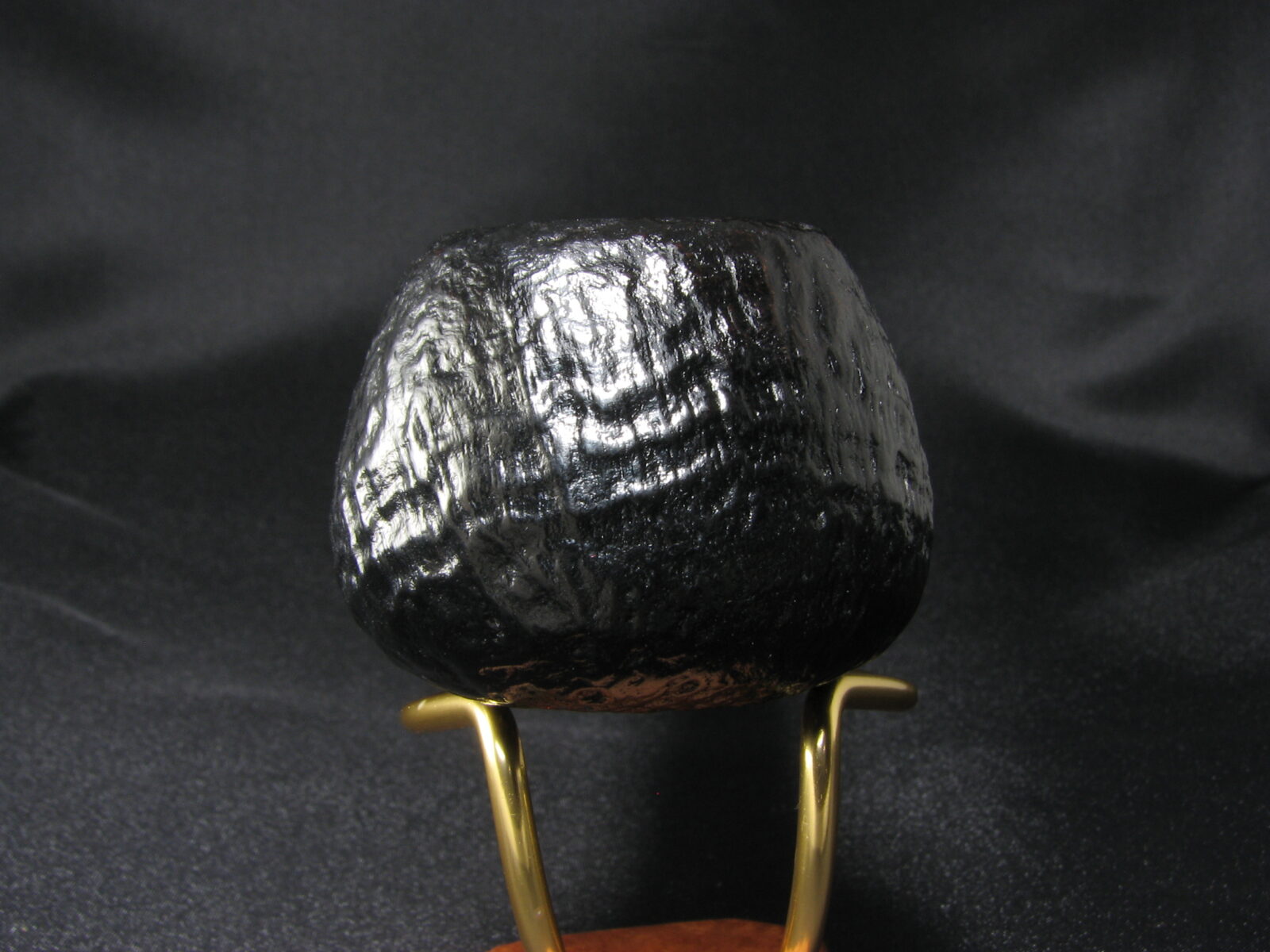
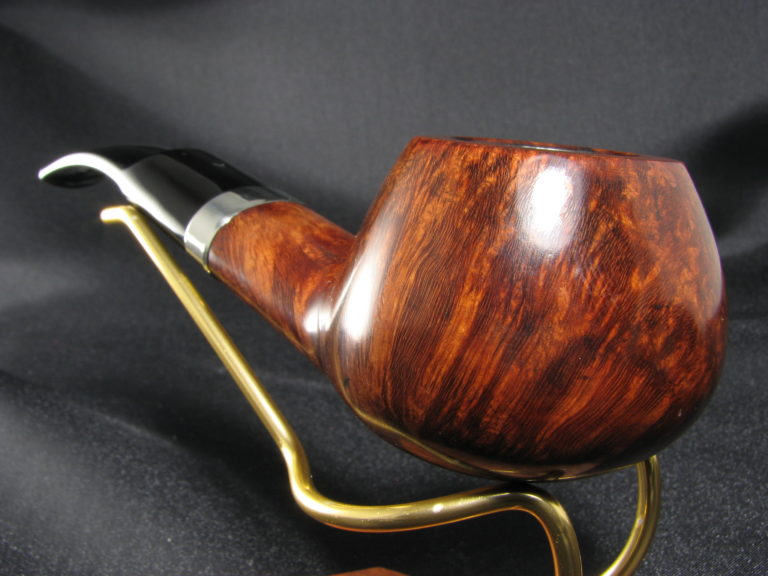
The sandblast finish is considered to be invented by Dunhill, at least this fact was confirmed with patents of 1917 – in Great Britain and 1920 – in the USA. From the very beginning Algerian briar was used for blasted pipes as it was much softer and provided deeper and more attractive finish. Although in 1960-70 the company had to use Corsican briar also, and in this case another Dunhill’s patent came into play – double processing (deep shell). It turned out that any material could provide the necessary result, you just need to have an appropriate technology near at hand. As an example – this wonderful diplomat shaped pipe from 1978.

​The pipe markings are “51281”, “DUNHILL SHELL \ MADE IN ENGLAND 18”. The length is 14.8 cm (5.83″), bowl’s height is 3.7 cm (1.46″). External diameter of the bowl is 4.5 cm (1.77″), internal diameter is 1.9 cm (0.75″). The depth is 2.8 cm (1.1″) and this pipe weights 47 gr. Briar, vulcanite stem (slightly corrected, you may see the track under a good light), no filter. The chamber has been protected with a break-in coat. The shank had a couple of neat cracks which were carefully fixed and the shank has been clamped by a collar for the maximal reliability.

Similar Posts

  • DUNHILL Bruyere bamboo

    England, 1998 The idea of using bamboo came from the WWII times when supply of briar to the United kingdom faced a really dramatical shortage and the English manufacturers looked for any possibility to use different materials if not for the complete pipe making, but at least to compensate for the deficit of briar. Competent…

  • DUNHILL Bruyere 33

    England, 1935-52 This Dunhill pipe came to us with the noticeably chewed mouthpiece and very faint nomenclature, and of course it was hardly possible to make it clearer, the challenge was to save at least a few more or less visible symbols during the restoration. So you may need very bright light and a good…

  • DUNHILL Root Briar 2000

    England, 2000 Let’s call it a “millenium pipe”. This attractive decent size (group 5) top grade Dunhills Root Briar pipe doesn’t have a shape number at all, but it says clearly it was made exactly in 2000. We assume the shape number should be 5113 (bent apple), but absence of this number makes the pipe…

  • DUNHILL Cumberland 31351

    England, 1981 Even if Dunhill didn’t obtain a patent for usage of brindle ebonite for stems, their input in promoting of a new material and invention of a suitable and well memorable name for it is undoubted. The name was born in 1979, when a new series of sandblasted pipes with modern stems was christened…

  • DUNHILL Root Briar 720, 1961-62

    England, 1961-62 Even among the highest grade Dunhill pipes you may find absolutely extraordinary and unique specimens. This Root Briar, except for two year suffixes (thus it belongs either to 1961 or to 1962), catches the eye immediately with an unusual rare shape (such a graceful semblance of an acorn), incredibly light weight (only 22…

  • DUNHILL Bruyere 416

    England, 1976 In the beginning Dunhill created Bruyere. And several years (1910-1917) it was the single brand made by the company of a firm and dense Calabrian briar. And though pre WWII “bruyeres” were marked just by a letter “A” instead of model, the Bruyere series is the one of the oldest long-livers not only…

Leave a Reply

Your email address will not be published. Required fields are marked *