Month: February 2025

  • ADLER

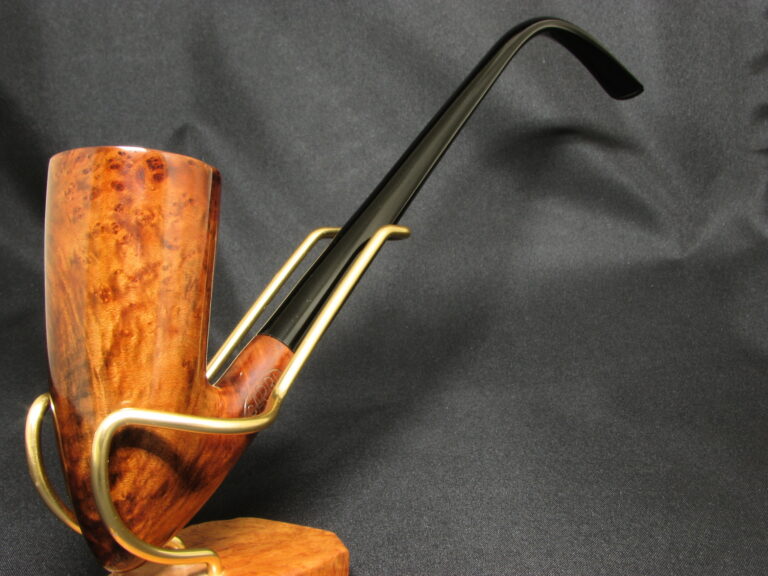
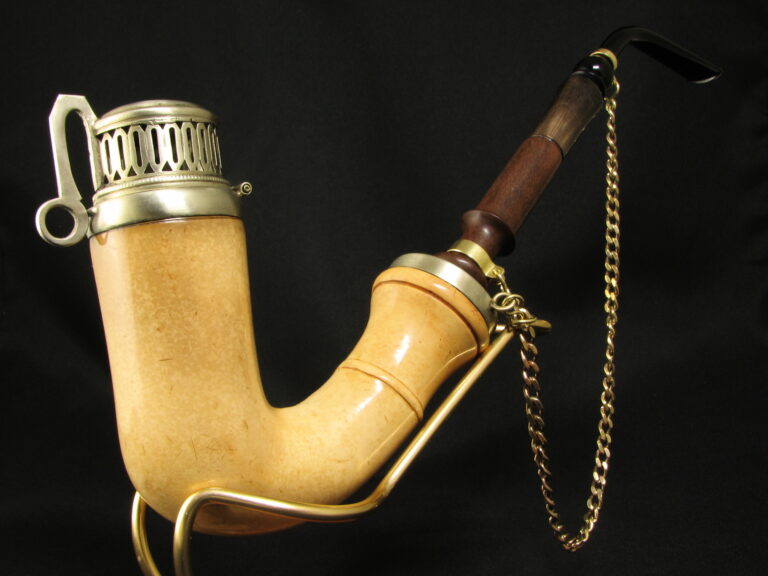
    Hungary, XIX century Hungary’s contribution to the history of pipes is not limited to the famous “Hungarian” maximally bent shape (Oom Paul). Meerschaum pipes, much like coffee, were introduced to Central and Eastern Europe during the Austro-Turkish wars of the 16th-18th centuries. Turkish caravans, captured during the wars, carried the pipes made of beautifully granular…

  • RADICE KSR

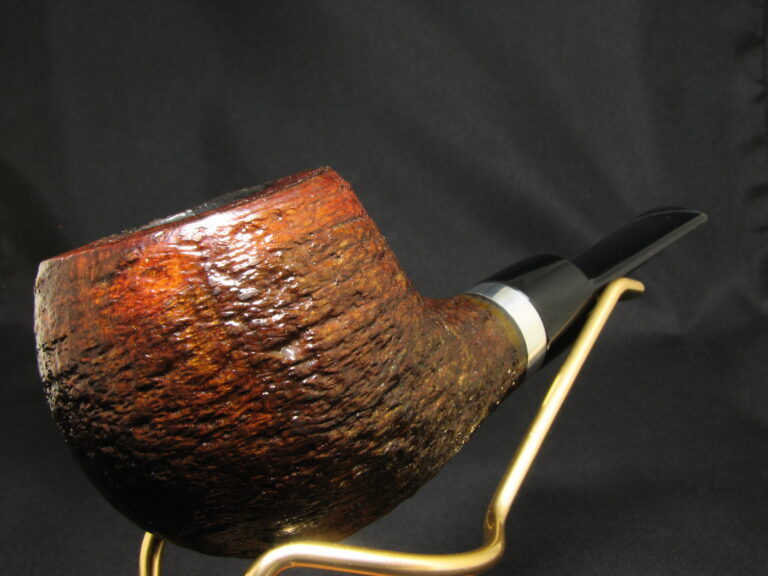
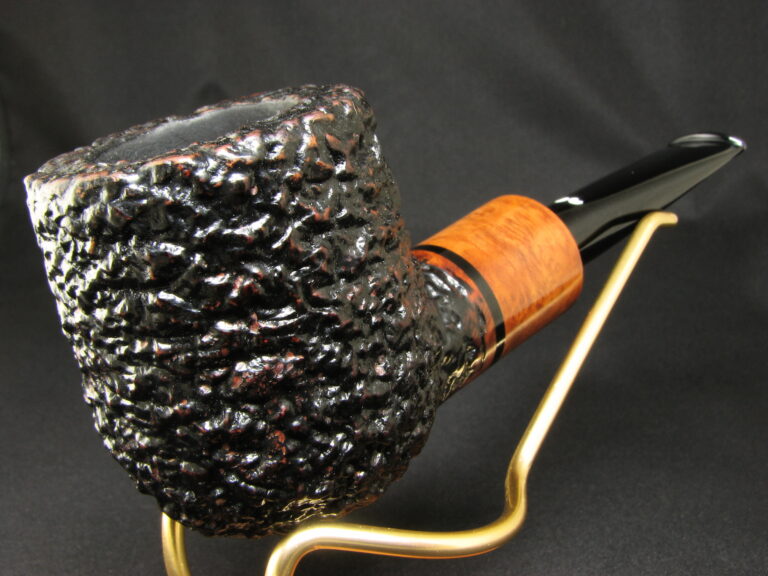
    Italy, 1980-2000s As previously mentioned, Luigi Radice is renowned for crafting exceptionally large pipes. However, even when a pipe is of more standard size, his signature style is often evident in long-shanked designs, which require extraordinary skill and a careful selection of briar. This is one such case: a masterfully rusticated, extra-long Radice pipe, released…

  • CAMINETTO S

    Italy, 1970s No need to search for a photo of the marking here—the logo with the famous “moustache” on the mouthpiece clearly identifies it as a Caminetto pipe. This compact and practical design from the 1970s was created by the distinguished trio of Giuseppe Ascorti (whose son, Roberto, later made the family name famous with…

  • DAVIDOFF 409 (2)

    France Zino Davidoff, renowned for his luxury cigar business, expanded his product range to include pipes in 1974. Since then, the Davidoff pipe collection has remained largely unchanged, offering the same 14 shapes in three finishes. It appears that only the contractors have changed over time. Originally, the primary supplier of Davidoff pipes was the…

  • ROPP Symphonie

    France, 2000-2010s This is a relatively recent and cleverly designed pipe from one of France’s most renowned brands. The bowl is made of acrylic with a briar insert, while the mouthpiece is traditionally crafted from ebonite. This combination is an innovative approach, opening up exciting possibilities for creating pipes from unexpected materials. Given the design…

  • CAPRI 673

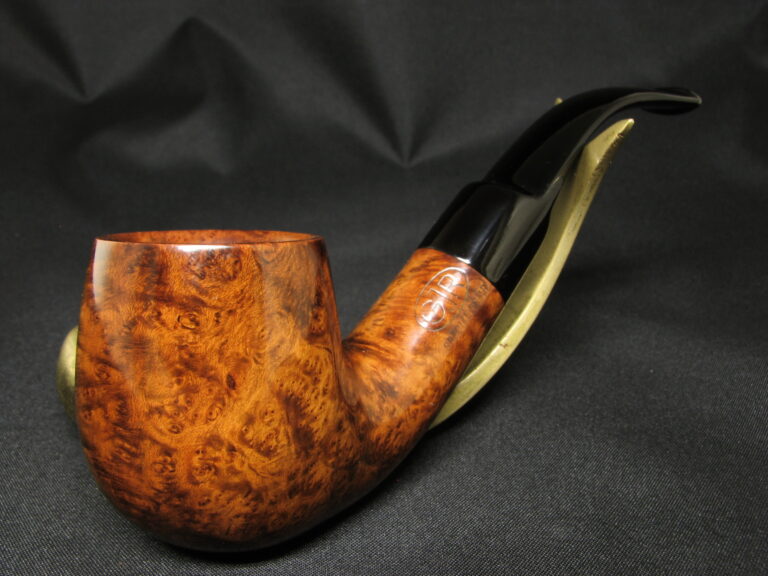
    Italy Three-digit shape numbers were introduced by Savinelli in the early 1970s, and they use a completely different font for markings. Therefore, this is definitely not a Savinelli Capri. At the same time, Wilczak and Cowell in their book “Who Made This Pipe?” refer to Oppenheimer, an old and respected English brand, and the Italian…

  • JELLING natural

    USA “If you must smoke, make it healthful and pleasurable.” Details about David Jelling’s tobacco business are limited, with directories and catalogs providing little more than a brief mention of a tobacco shop in Newark that also sold pipes sourced from other suppliers. More information can be gathered from artifacts of the era, primarily matchbooks…

  • GJR Special Briar 623

    Italy, 1960-80s The pipe bearing the GJR marking is likely the result of a collaboration between Danish craftsman and entrepreneur Georg Jensen (GJ) and the Italian pipe factory Rossi (R) during the 1960s to 1980s. The beveled top of the bowl gives the design a distinctly Danish appearance, while the shape number 620 in Rossi’s…

  • Amitie Africaine

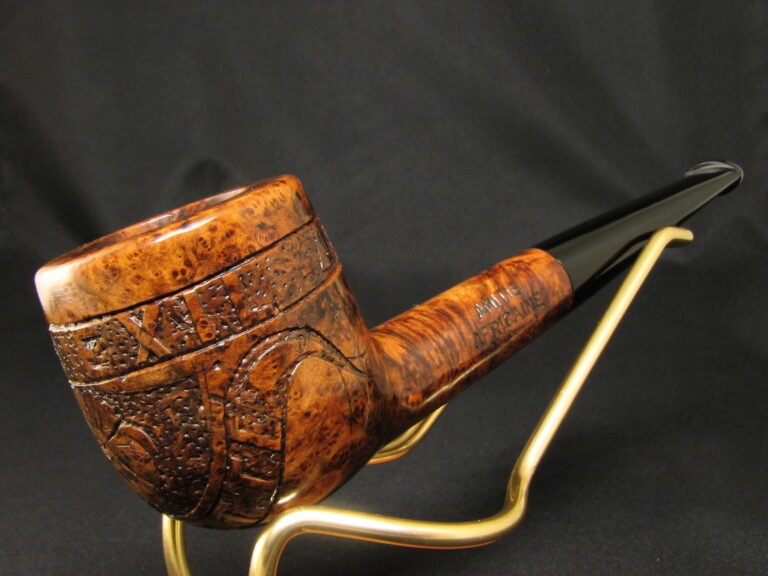
    France, 1930s Even if we do not know the exact year this pipe was made, based on its markings and historical context, we can reasonably place it at the very end of the 1930s or, at the latest, 1940. The year 1940 was tragic for France. The country attempted to resist the German invasion but…

  • TURKIEWICZ

    Poland Robert Turkiewicz, a Polish artisan, is known for his solo project and for working at Mr. Brog in Przemyśl, where he became renowned for crafting freehand pipes. Today, a wide range of pipes by Turkiewicz can be found online, with the majority made from bog oak (morta), and occasionally from pear or cherry wood….