BARLING'S MAKE Ye Olde Wood Special EL

BARLING’S MAKE Ye Olde Wood Special EL

England, 1940-50s

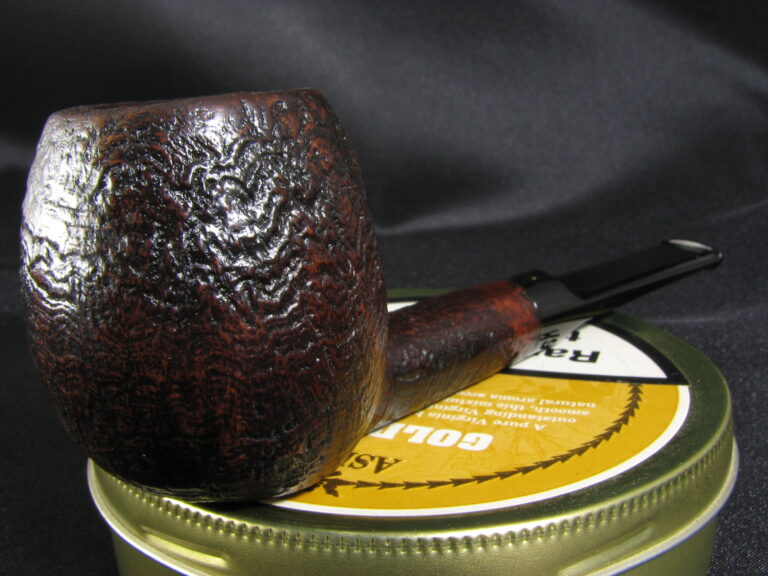
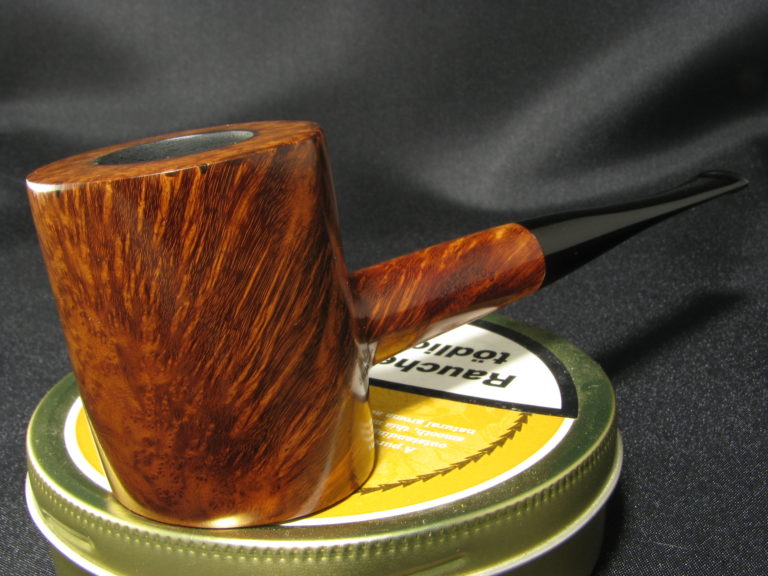
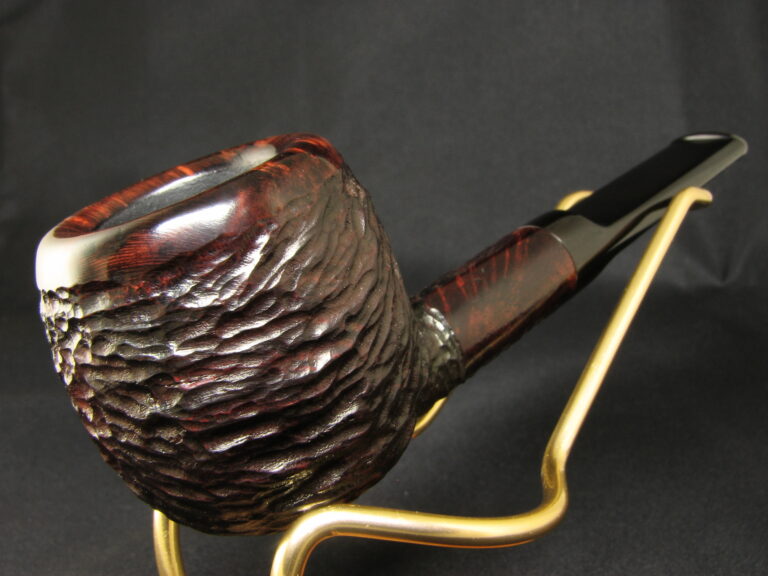
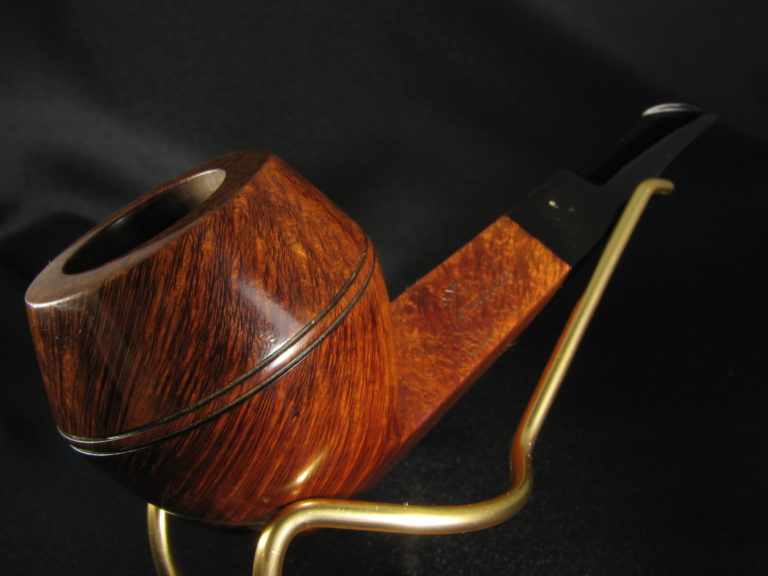
A lightweight elegant traditional English “woodstock” (also known as a yacht or zulu) pipe made at Barling’s family factory between 1941 and 1962, i.e. during the pre-transition period. The arched BARLING’S MAKE logo is already of a full size, larger than before WWII. There’s still no shape number, but the size designation “EL” was introduced after 1941 when Barling expanded the range of sizes. A really collectible item!

The pipe marking is “BARLING’S \ MAKE \ YE OLDE WOOD \ Special”, “T.V.F.”, “MADE IN \ ENGLAND”, “EL”. The length is 14.1 cm (5.55″), the bowl’s height is 4.3 cm (1.69″). External diameter of the bowl is 3.0 cm (1.18″), internal diameter is 1.9 cm (0.75″). The depth is 3.6 cm (1.42″) and this pipe weights 27 gr. Briar, vulcanite stem, no filter. The chamber has normal moderately smoked wear without any critical issues. The logos on the stem (crossed “BARLING” and REGD Nr.) are almosy invisible, but you may find them under a very good light.

Similar Posts

  • BARLING King 6229 T.V.F.

    England, 1960s This large sandblasted apple is already a corporate era Barling pipe, the most experienced experts assign the King series with such nomenclature to 1962-1970. Although these “corporate” Barlings don’t cost hundreds of dollars the pipes were carved very skillfully and with all possible respects to 150-year Barling family pipe making tradition.

  • BARLING’S MAKE 1670

    England, 1950s Barling family-era pipes are a pleasure to work with, not only because they are highly sought after by collectors, but also because they are incredibly durable. The mouthpiece may already be bitten, the markings worn off, and the top of the bowl nicked from being knocked against a heel (a habit, unfortunately, common…

  • BARLING 3229

    England, 1950-60s This pipe is not a product of the Barling family period, but it clearly retains many of the characteristic traits of that era: the shape, the mouthpiece profile, and the distinctive Barling-style button. Therefore, we can confidently conclude that the pipe was crafted not long after the transition period, still carrying the charm…

Leave a Reply

Your email address will not be published. Required fields are marked *