DUNHILL Root Briar 720, 1961-62

DUNHILL Root Briar 720, 1961-62

England, 1961-62

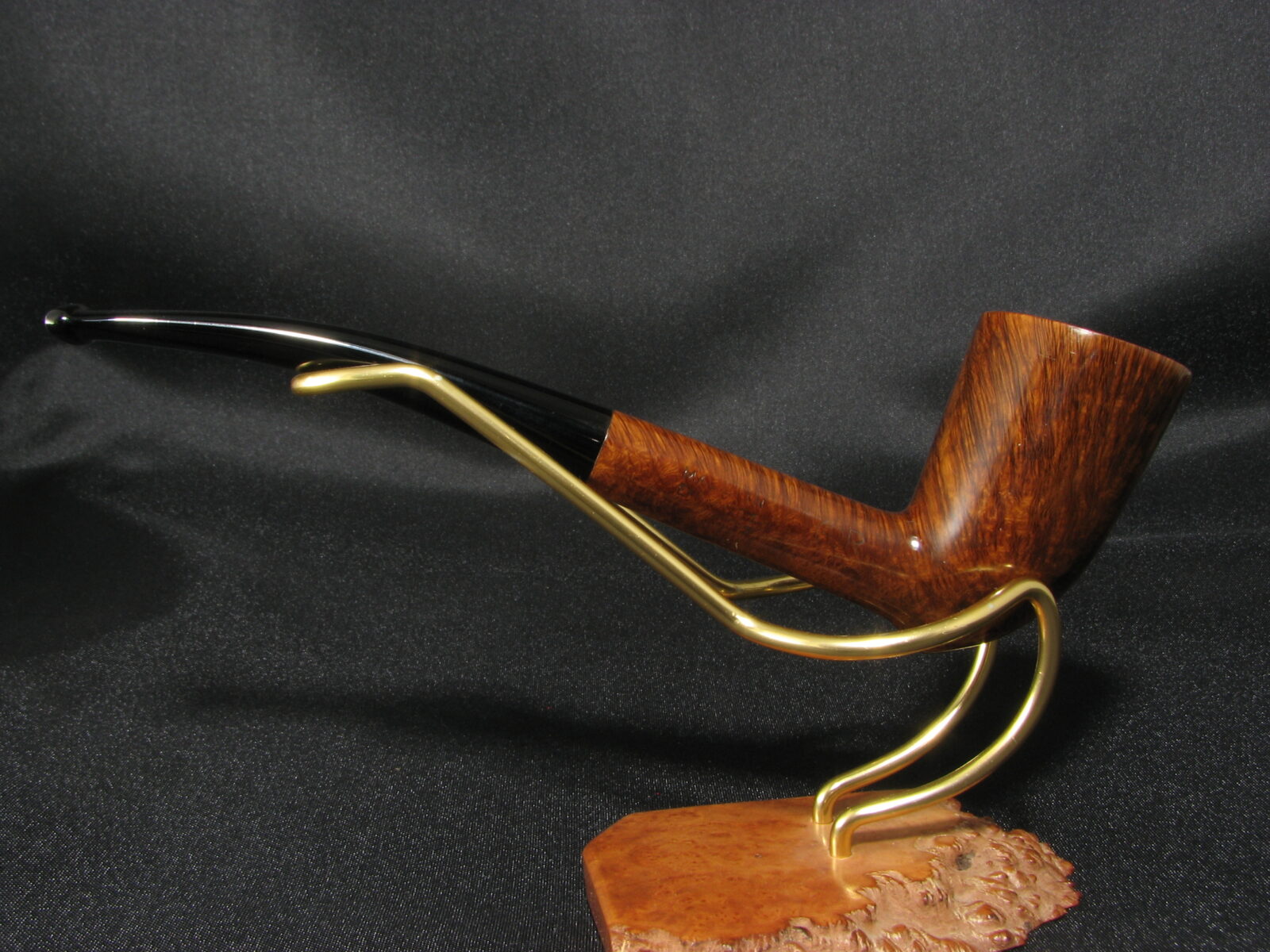
Even among the highest grade Dunhill pipes you may find absolutely extraordinary and unique specimens. This Root Briar, except for two year suffixes (thus it belongs either to 1961 or to 1962), catches the eye immediately with an unusual rare shape (such a graceful semblance of an acorn), incredibly light weight (only 22 grams with a fairly standard chamber volume), and the amazing grain. A highly collectable finding!

The pipe markings are “720 F/T”, “DUNHILL \ ROOT BRIAR”, “MADE IN \ ENGLAND 1 \ 2”, “(4) R”. The length is 14.5 cm (5.71″), bowl’s height is 4.7 cm (1.85″). External diameter of the bowl is 3.0 cm (1.18″), internal diameter is 1.8 cm (0.71″). The depth is 3.9 cm (1.54″) and this pipe weights 22 gr. Briar, vulcanite stem, patented aluminium stinger.


Similar Posts

  • PARKER Root Bruyere 42

    England, 1950-60s Children should have some degree of a freedom. Especially such “children” as the Parker trademark. That’s very well known story: the Parker company was founded by Alfred Dunhill in 1922 for the quite utilitarian purposes: to finish and market pipes which didn’t went into production as the Dunhill ones. However, this split happened…

  • DUNHILL Bruyere 5128

    England, 1988 One of the largest (Group size 5) Dunhill pipes of the oldest and most popular series and very successful “Diplomat” shape. The pipe was born in 1983, but looks very young and fresh and as for its age. Highly recommended!

  • DUNHILL Cumberland 41022

    England, 1982 Even if Dunhill didn’t obtain a patent for usage of brindle ebonite for stems, their input in promoting of a new material and invention of a suitable and well memorable name for it is undoubted. The name was born in 1979, when a new series of sandblasted pipes with modern stems was christened…

  • DUNHILL Root Briar 5109

    England, 1986 Initially Dunhill didn’t pay any special attention to a grain of briar. Perhaps, the public opinion had not been ready yet to a “straight grain” and material of early Bruyere pipes didn’t differ by a remarkable grain. But in 1931 Root Briar series was started. The pipes were made of Corsican briar, wonderful…

  • DUNHILL Bruyere bamboo

    England, 1998 The idea of using bamboo came from the WWII times when supply of briar to the United kingdom faced a really dramatical shortage and the English manufacturers looked for any possibility to use different materials if not for the complete pipe making, but at least to compensate for the deficit of briar. Competent…

Leave a Reply

Your email address will not be published. Required fields are marked *