DUNHILL Tanshell 142

DUNHILL Tanshell 142

England, 1966

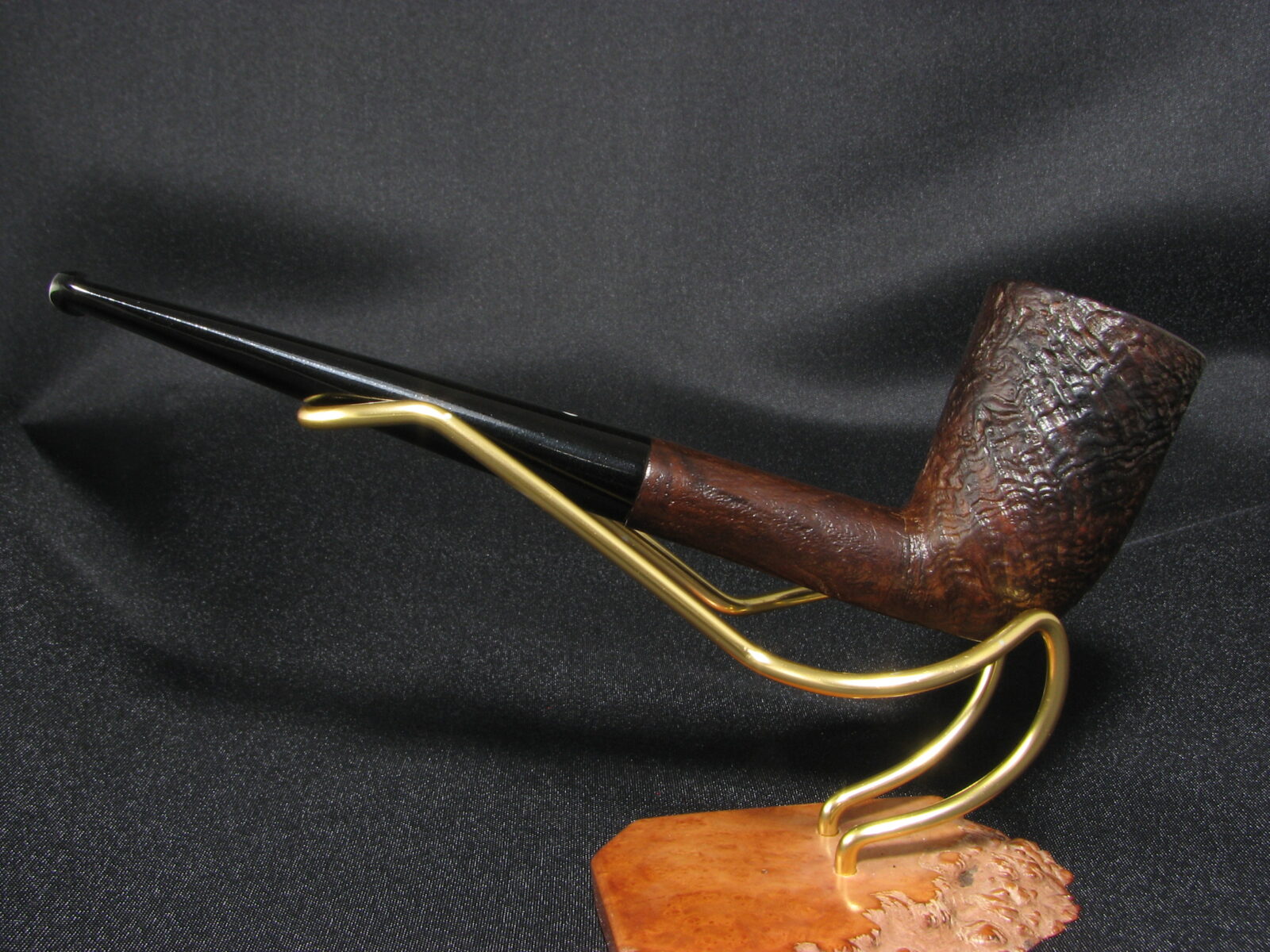
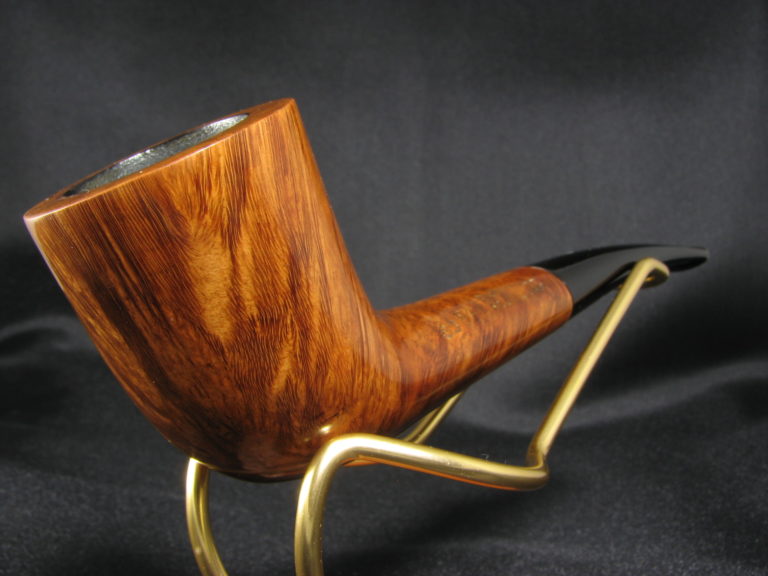
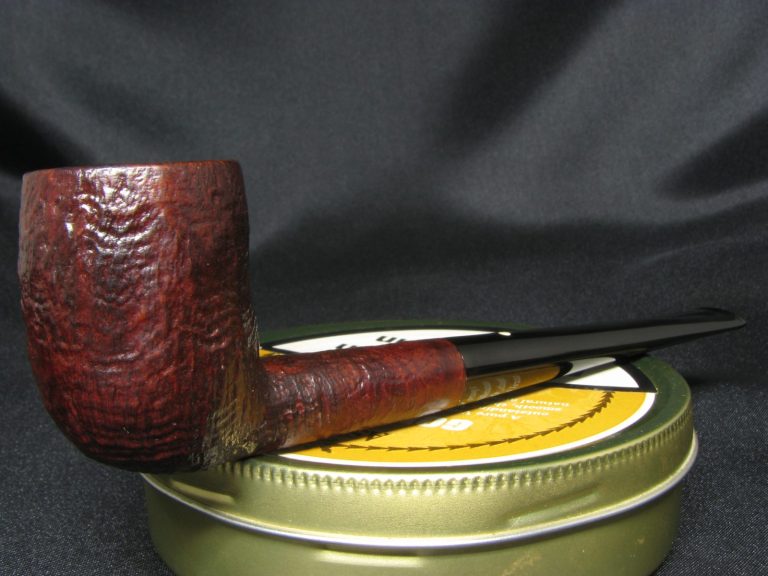
The Dunhill Tanshell series is a child of stormy 1950-60s. Due to a difficult political situation in Algeria supply of Algerian briar was temporally suspended. The situation was used by Dunhill as a good chance to try Sardinian briar and to use own patented deep sandblast technique.  The material is significantly much denser, therefore the finish turned out very uncommon and interesting. As an  example we can offer  this billiard of the 1966 year of birth for your attention.

The pipe markings (slightly worn) are “142 F/T”, “DUNHILL \ TANSHELL”, “MADE IN \ ENGLAND 6”, “(4) T”. The length is 14.5 cm (5.7″), bowl’s height is 4.7 cm (1.85″). External diameter of the bowl is  3.0 cm (1.18″),  internal diameter is 2.0 cm (0.79″). The depth is 4.0 cm (1.57″) and this pipe weights 28 gr. Briar, vulcanite stem, no filter. The chamber has been protected with a break-in coat. The stem is a nicely made replica one. We can’t claim it repeats an original stem ideally and is ideally ajusted to the pipe shape, but it sits reliably, the air channel is well visible thus there’s everything fine from the engineering side.


Similar Posts

  • DUNHILL Root Briar 83 (1968)

    England, 1968 Thanks to Dunhill’s clearness and punctuality – there’s everything crystal clear with this pipe dating and grading. This is the wonderful and lightweight Root briar pipe (the highest mass market grade) made in 1968. The shape number 83 is called a horn or a yacht – what you like more. Nice, amazing and…

  • DUNHILL Cumberland 3103

    England, 2002 Even if Dunhill didn’t obtain a patent for usage of brindle ebonite for stems, their input in promoting of a new material and invention of a suitable and well memorable name for it is undoubted. The name was born in 1979, when a new series of sandblasted pipes with modern stems was christened…

  • DUNHILL Root Briar 501, 1940

    England, 1940 No staining just a natural finish! This is an exciting indeed example of the good old fashioned English pipe carving art. The pipe was made in 1940, already on the beginning of the Wold War II, but it shows the same approach, the same sense of taste and the same highest skills which…

  • DUNHILL Cumberland 31351

    England, 1981 Even if Dunhill didn’t obtain a patent for usage of brindle ebonite for stems, their input in promoting of a new material and invention of a suitable and well memorable name for it is undoubted. The name was born in 1979, when a new series of sandblasted pipes with modern stems was christened…

  • DUNHILL Root Briar 463

    England, 1955 Sometimes even a little person can play an essential (if not solving) role in large-scale events. At least there are enough movies with such moral. The same we could say about small enterprises and their influence on development of pipe making art: even a small manufactory can leave its very and very notable…

Leave a Reply

Your email address will not be published. Required fields are marked *