CHARATAN'S MAKE Selected F. H. lovat

CHARATAN’S MAKE Selected F. H. lovat

England, 1960s

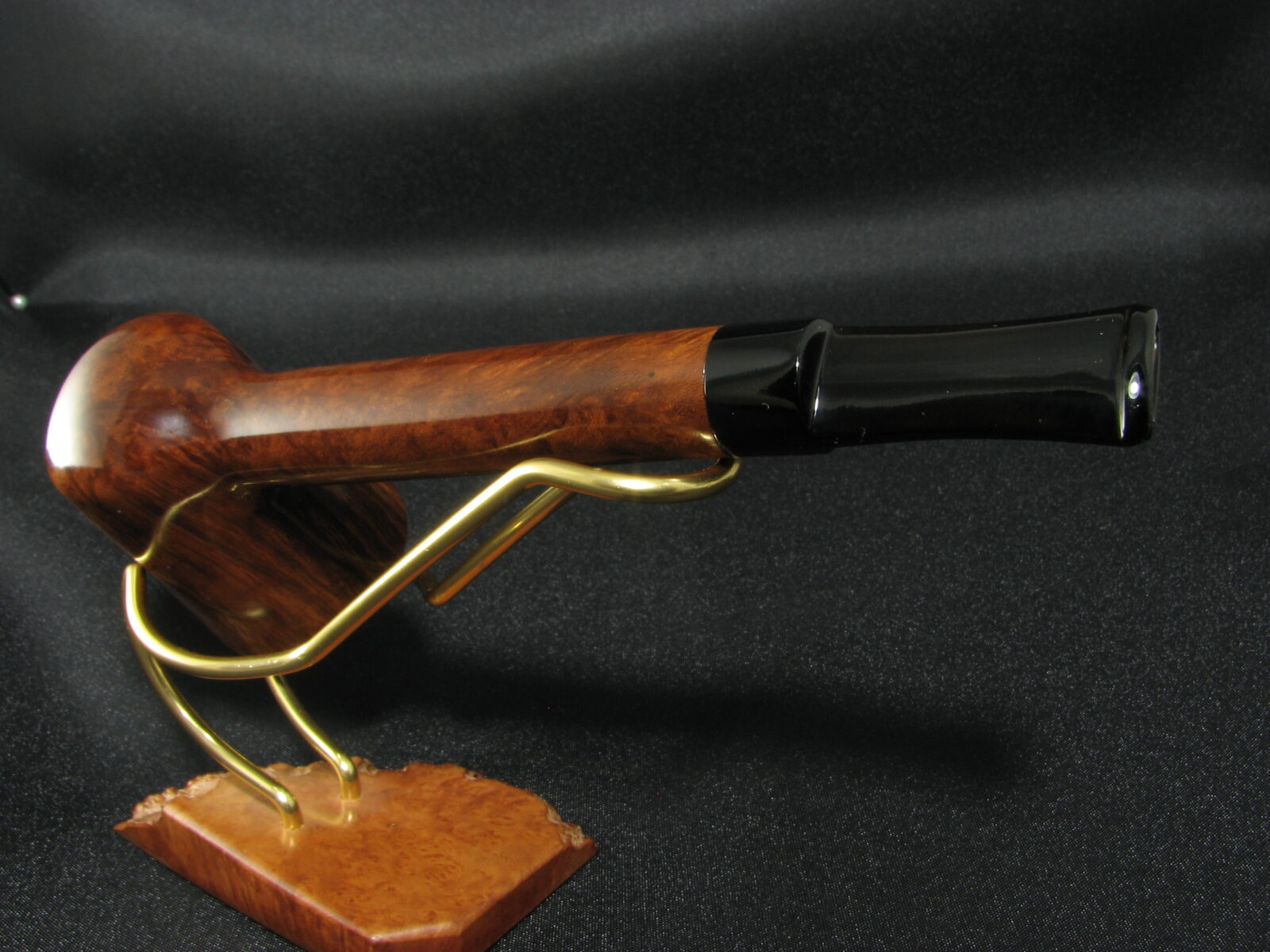
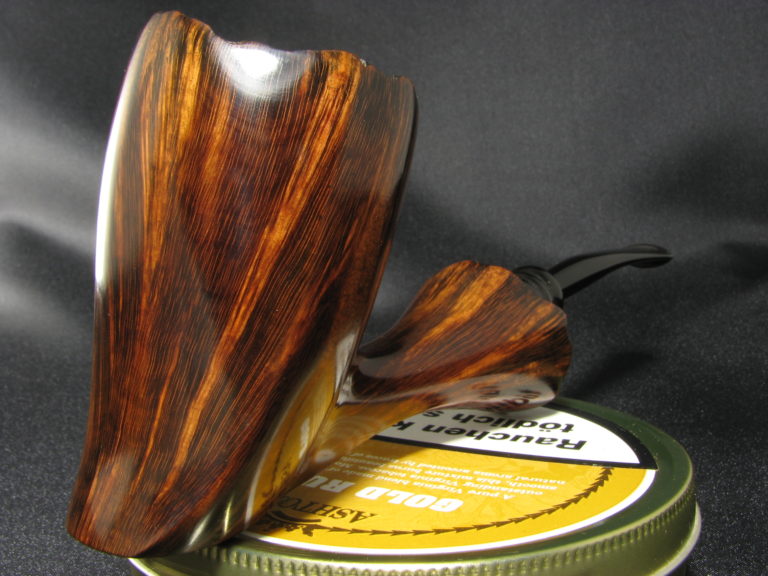
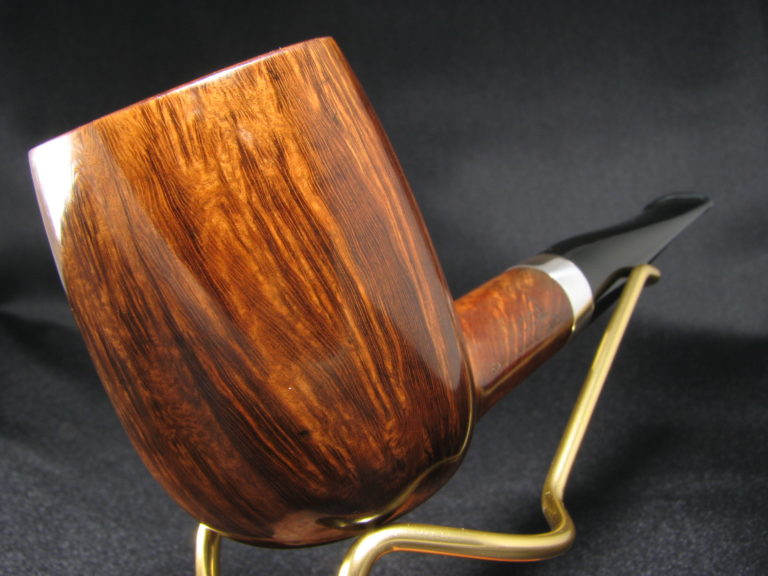
It’s perhaps the best example how a simple and almost purely geometric shape can turn out into an unexpectedly wonderful exciting work of art. A little bit freehand, a little bit lovat and eye catching straight grain briar – the very high grade (“Selected” was next to the incomparable highest “Supreme” line) Lane era Charatan’s make pipe from the 1960s!

​The pipe markings are “(L)”, “CHARATAN’S MAKE \ LONDON. ENGLAND \ SELECTED”, “F.H.””. The length is 15.0 cm (5.9″), bowl’s height is 5.2 cm (2.05″). External diameter of the bowl is 3.7 cm (1.46″), internal diameter is 2.3 cm (0.9″). The depth is 3.8 cm (1.5″) and this pipe weights 40 gr. Briar, vulcanite stem, no filter.

Similar Posts

  • LORD Real Briar 1920

    USA We can’t confirm that this pipe was cut out of briar of 1920 (but who knows, might by the carver did really found old stocks of “Doctor Grabow” or “Medico”), but the material was selected undoubtedly intelligently and with the excellent taste. Such grain could be a subject of pride for any Danish pipe…

  • CHARATAN’S MAKE Belvedere 1180

    England, 1950-60s A very interesting and unusual Charatan’s make pipe with a tapered mouthpiece and a luxurious silver collar. This is the Belvedere pipe, either from the late Ruben or the early Lane period; soon, tapered mouthpieces will be replaced exclusively by saddle or patented Double Comfort (DC), and shape numbers will necessarily be accompanied…

  • CIVIC Matt De Luxe 016

    England From the first look the pipe reminds Comoy’s creatures – well selected briar with a wonderful almost perfect straight grain and typical for Comoy’s contrast staining. And this impression seems to be reasonable – the pipe was made by Cadogan Investments – the company, which obtained not only Comoy’s brand name, but materials, technologies…

  • CHACOM Bayard S62

    France All available sources unambiguously classify the pipe as a Chacom product. The series is very probably named after Pierre Terrail, seigneur de Bayard (c. 1476 – 30 April 1524), “a French knight at the transition between the Middle Ages and the Renaissance, generally known as the Chevalier de Bayard. Throughout the centuries since his…

Leave a Reply

Your email address will not be published. Required fields are marked *