CHARATAN’S MAKE Selected extra long

England, 1960s

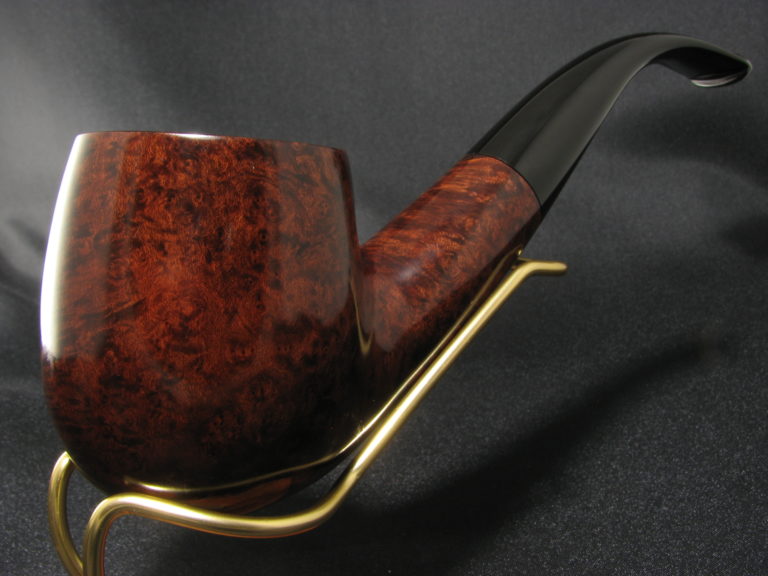
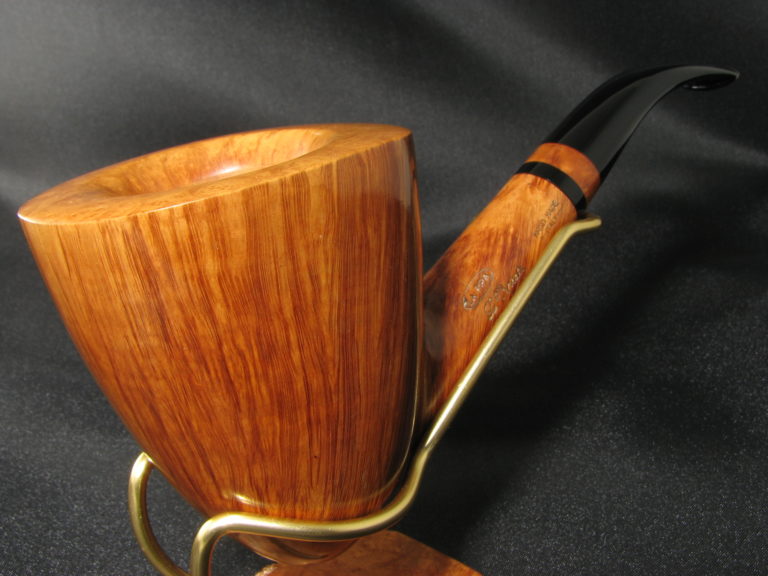
A very high grade Charatan’s pipe from the “Lane era” (1960-76), the period of the brightest blossoming of this brand, delightful shapes and grains which eclipsed all others pipe makers including Dunhill. Every Charatan’s admirer knows the highest grade was the “Supreme”. Another one of the highest grades, “Selected” level was the second from the top. In fact, it’s difficult to explain at times why the certain work of art was graded only as “Selected”: in both cases the pipes were made of a very high quality briar, had clear attractive grain and very stylish shapes created by leading carvers from Charatan’s.

The pipe marking is “(L)”, CHARATAN’S MAKE\ LONDON. ENGLAND \ SELECTED”. The length is 18.4 cm (7.24″), the bowl’s height is 5.4 cm (2.12″). External diameter of the bowl is 4.4 cm (1.73″), internal diameter is 2.5 cm (0.98″). The depth is 4.2 cm (1.65″) and this pipe weights 54 gr. Briar, vulcanite stem, no filter.

Similar Posts

  • IIS

    Denmark, 1970s Authoritative sources attribute the authorship of IIS pipes to Karl Erik, a talented Danish craftsman, or to the renowned Preben Holm. In our opinion, this piece was most definitely crafted in the workshop of Karl Erik Ottendahl—the specific type of briar and the meticulous shaping that highlights the grain are clear indicators of…

  • CASSANO 957

    Italy An Italian “electrical pipe” inspired by St Claude! Gerolamo Ceresa began at the end of the XIX century as a subcontractor for Rossi Factory (Barasso), but soon (1919) he founded new own very modern operated electrically (!) factory under the name “Gerolamo Ceresa – Fabbrica elettrica pipe”. That was a real break through at…

  • NORTHERN BRIARS Extra Special

    England, 2011 We are thrilled to have finally added Ian Walker’s Northern Briars Extra Special pipe to our collection. This particular pipe features a distinctive, combined finish that some refer to as “oriental”. While this design may not be Ian’s original creation, similar finishes were used on John Redman’s Redonian pipes in the mid-20th century….

Leave a Reply

Your email address will not be published. Required fields are marked *