PARKER Root Bruyere 42

PARKER Root Bruyere 42

England, 1950-60s

Children should have some degree of a freedom. Especially such “children” as the Parker trademark. That’s very well known story: the Parker company was founded by Alfred Dunhill in 1922 for the quite utilitarian purposes: to finish and market pipes which didn’t went into production as the Dunhill ones. However, this split happened unlike other manufacturers much earlier, just after a bowl turning. And all further processes – stoving, curing, carving, finishing – happened already in the Parker’s specific way. After the merge into Parker-Hardcastle fathers and children dispersed even more strongly: Parker acted as an absolutely independent business unit from the suply of material to the marketing policy.

This approach was quite justified, the most interesting and collectable Parkers were made in 1950-60, under conditions of the freedom of creativity and freedom of business. There is, however, a question how to identify them, those pipes?

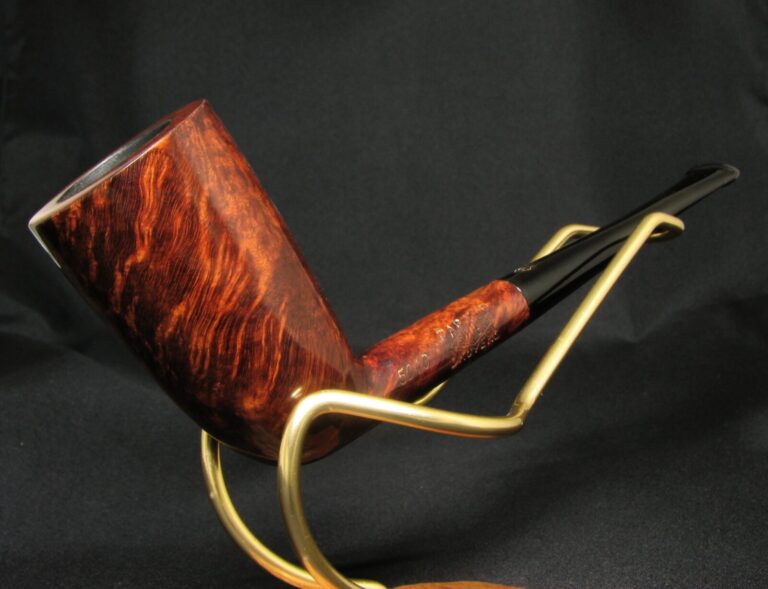
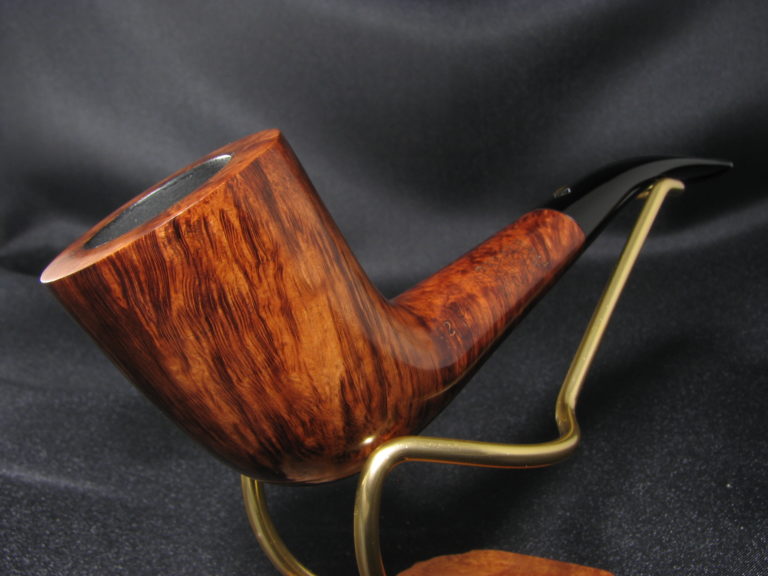
First of all, Parker conducted dating of products similarly to Dunhill: from 1925 till 1941, and then after an interruption – from 1945 till 1957. Secondly, old catalogues are interesting and useful indeed. Such Root Bruyere was published in the Parker’s catalogue of 1955, but in the 1970’s similar models weren’t offered any more. So even the lack of a year suffix shouldn’t confuse: the pipe was made after 1957, but not later than 1967 when models of Parker and models of Hardcastle were significantly reconsidered. Family traits, naturally, are present too: the group size, and the inner tube.

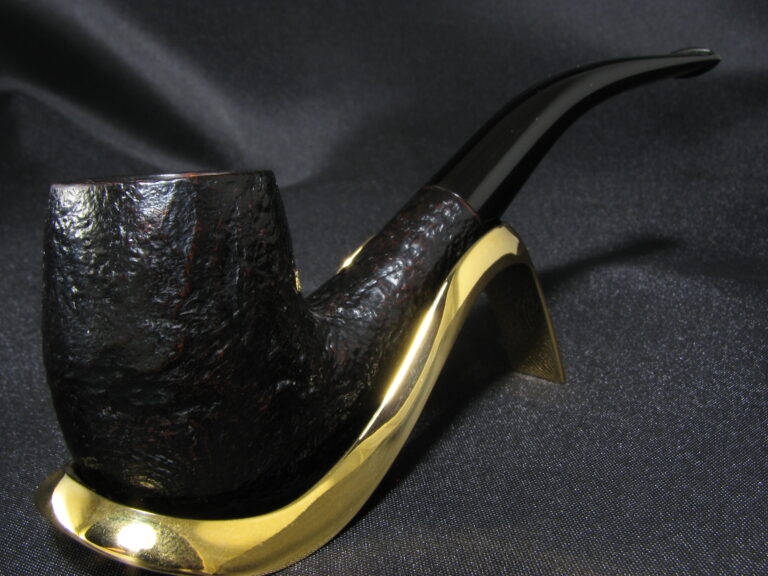
The pipe markings are”PARKER \ \ BRUYERE”, “42”, “MADE IN LONDON \ ENGLAND”, “(3)”. The length is 15.2 cm, bowl’s hight is 4.6 cm. External and internal diameters of the bowl are 3.1 cm and 1.8 cm. The depth is 3.5 cm and this pipe weights 28 gr. Briar, vulcanite stem, inner tube.


Similar Posts

  • PARKER Jockey Club 46

    England A compact, lightweight, and affordable pipe hailing from the famous Dunhill’s subsidiary, Parker. The company was initially established by Alfred Dunhill to market Dunhill seconds and also served as an internal creative lab during certain periods. Dunhills and Parkers were made in the same premises using the same equipment at least until the last…

  • DUNHILL Root Briar 83 (1968)

    England, 1968 Thanks to Dunhill’s clearness and punctuality – there’s everything crystal clear with this pipe dating and grading. This is the wonderful and lightweight Root briar pipe (the highest mass market grade) made in 1968. The shape number 83 is called a horn or a yacht – what you like more. Nice, amazing and…

  • ORLIK Special L172

    England, 1950-70s L&A Orlik was a well known manufacturer of great quality and at the same time inexpensive pipes since the end of XIX century till añquisition by Cadogan in 1980. Despite more advanced management and technology level of Cadogan Group’s production these pipes from pre-cadogan era made without Hi-Tech tricks but with love are…

  • SASIENI Berkeley Club 715LR

    England, 1950-70s A nice example of the incomparable and legendary rustication from Sasieni – one of the most aggressive and active competitors of Dunhill for many years. The family business successfully worked till 1979 – until the recession of demand in pipes forced to sell the business to new investors, and interest in Sasieni among…

  • PARKER Super Bruyere 5040

    England, 1957-67 An elegant lightweight Parker pensil shank pipe produced between 1957 and 1967, prior to the company’s merger with Hardcastle Pipe Ltd. This was a period when Parker successfully combined Dunhill’s resources and production facilities with its own unique approach to carving, shaping, finishing, and marketing. As a result, both experienced pipe collectors and…

  • PARKER Super Bruyere 5/F

    England, 1950-60s A traditional English Parker pipe made approxymately between 1957 and 1967, before merge with Hardcastle Pipe Ltd. It was the period, when Parker succesfully combined Dunhill’s resources and production facility and its own, at times very different from Dunhill’s approach to carving, shaping, finishing and marketing. Therefore both experienced pipe collectors and refined…

Leave a Reply

Your email address will not be published. Required fields are marked *