DUNHILL Bruyere 42024

England, 1979

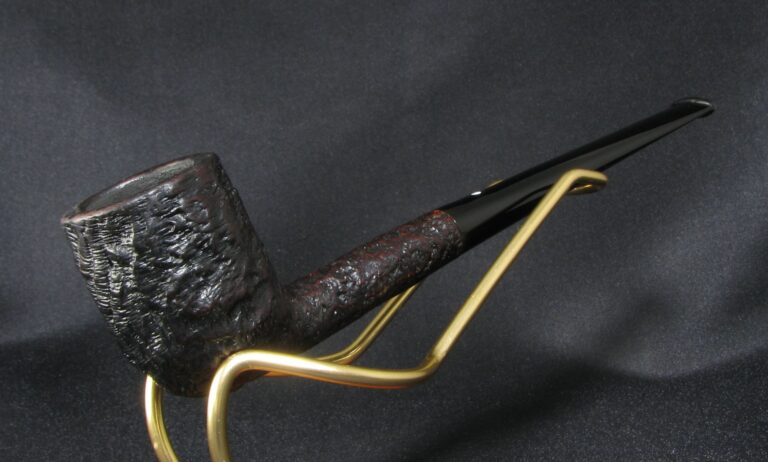
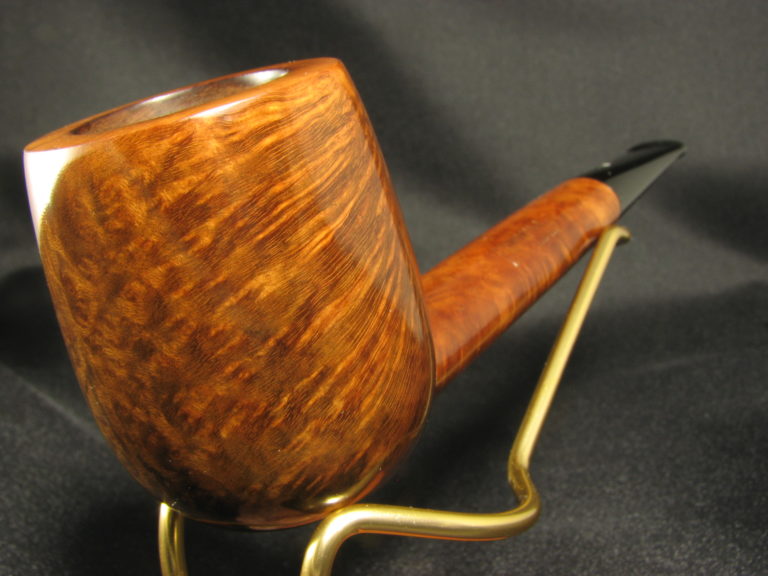
An absolutely amazing pipe of the absolutely classical bent shape and absolutely comfortable size (Dunhill’s Group 4 pipes fit great both the aromatic and oriental (English) tobacco smokers’ needs) made by absolutely luxury manufacturer at the absolutely lucky times (the pipe comes from 1979). Lightly smoked, the chamber doesn’t have any substantial wear. Absolutely recommended!

The pipe markings are “42024 \ DUNHILL \ BRUYERE”, “MADE IN \ ENGLAND 19”. The length is 11.7 cm (4.61″), bowl’s height is 4.7 cm (1.85″). External diameter of the bowl is 3.7 cm (1.46″), internal diameter is 2.0 cm (0.79″). The depth is 3.8 cm (1.5″) and this pipe weights 49 gr. Briar, vulcanite stem, no filter. The pipe comes with an original leather pouch.

Similar Posts

  • DUNHILL Shell 6163

    England, 1978 The sandblast finish is considered to be invented by Dunhill, at least this fact was confirmed with patents of 1917 – in Great Britain and 1920 – in the USA. From the beginning Algerian briar was used for blasted pipes as much softer and providing deeper and more attractive finish. Although in 1960-70…

  • DUNHILL Shell Briar 120

    England, 1962-63 It seems the pipe has two year suffixes – one (“2”) was printed after the word “England” and the second (“3”) is located a bit below it. A new year transition pipe? 🙂 Despite the Group Size 4 the pipe really impresses with its dimensions and the shape – a very stylish large…

  • DUNHILL Red Bark 197, 1970s

    England, 1970s Red Bark is perhaps the best-known and valued Dunhill series among other “retired”. The Red Bark pipes were produced not for a long time – from 1972 to 1987, and in fact, they are traditional sandblasted Dunhills, but smokers and collectors are still attracted by these pipes and their unusual staining. By the…

  • DUNHILL Bruyere 33

    England, 1935-52 This Dunhill pipe came to us with the noticeably chewed mouthpiece and very faint nomenclature, and of course it was hardly possible to make it clearer, the challenge was to save at least a few more or less visible symbols during the restoration. So you may need very bright light and a good…

Leave a Reply

Your email address will not be published. Required fields are marked *