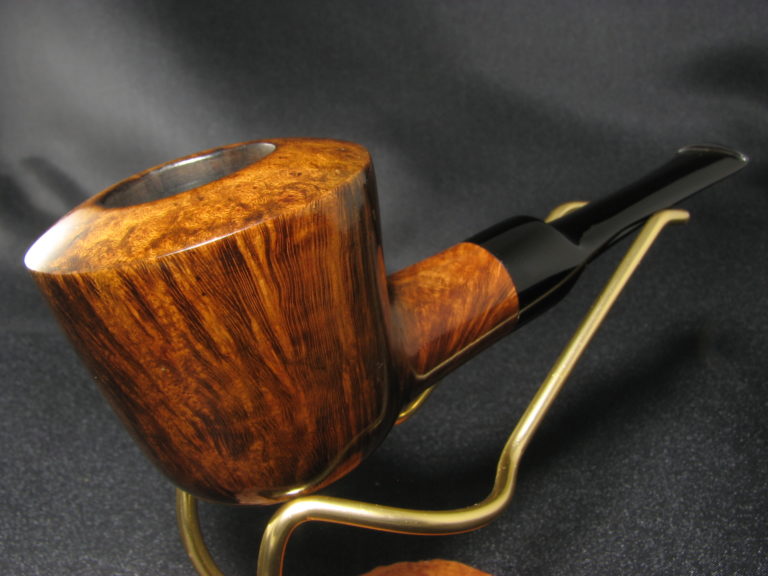
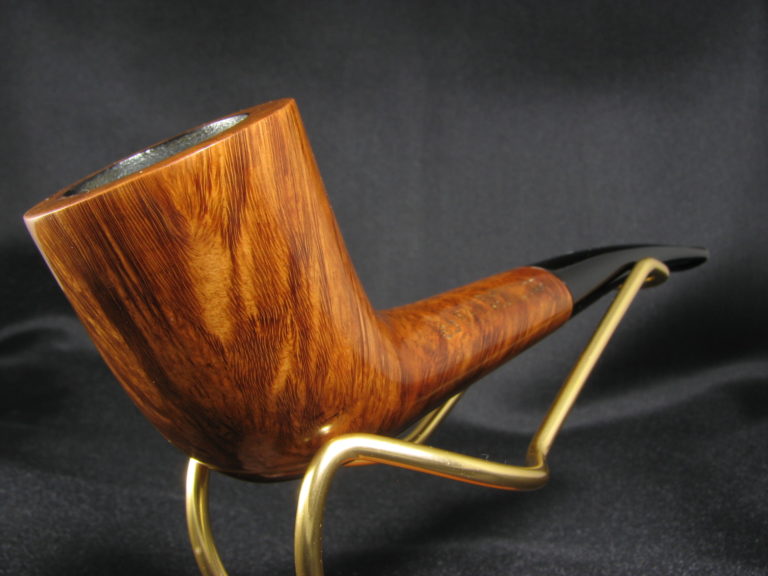
DUNHILL Shell 6163

DUNHILL Shell 6163

England, 1978

The sandblast finish is considered to be invented by Dunhill, at least this fact was confirmed with patents of 1917 – in Great Britain and 1920 – in the USA. From the beginning Algerian briar was used for blasted pipes as much softer and providing deeper and more attractive finish. Although in 1960-70 the company had to use also Corsican briar, and in this case another Dunhill’s patent came into play – double processing (deep shell). It turned out, any material could provide the necessary result, you just need to have an appropriate technology near at hand. As an example – this elegant pot from 1978.

The pipe markings are “6163 \ F/T”, “DUNHILL SHELL \ MADE IN ENGLAND 8”. The length is 13.8 cm, bowl’s hight is 3.5 cm. External and internal diameters of the bowl are 3.5 cm and 2.1 cm. The depth is 2.8 cm and this pipe weights 22 gr. Briar, vulcanite stem, no filter. The chamber has been protected with the break in coat.


Similar Posts

  • DUNHILL Root Briar 83 (1968)

    England, 1968 Thanks to Dunhill’s clearness and punctuality – there’s everything crystal clear with this pipe dating and grading. This is the wonderful and lightweight Root briar pipe (the highest mass market grade) made in 1968. The shape number 83 is called a horn or a yacht – what you like more. Nice, amazing and…

  • DUNHILL Root Briar 501, 1940

    England, 1940 No staining just a natural finish! This is an exciting indeed example of the good old fashioned English pipe carving art. The pipe was made in 1940, already on the beginning of the Wold War II, but it shows the same approach, the same sense of taste and the same highest skills which…

  • DUNHILL Shell Briar 591

    England, 1956 An absolutely amazing highly collectable full bent (“Oom Paul”) pipe created by Dunhill carvers in 1956. The pipe is completed with two newly made stems: the canonical black vulcanite stem with the white spot according to Dunhill standards and the modernistic inversion white acrylic stem with the black spot. So you may choose…

  • DUNHILL Cumberland 31351

    England, 1981 Even if Dunhill didn’t obtain a patent for usage of brindle ebonite for stems, their input in promoting of a new material and invention of a suitable and well memorable name for it is undoubted. The name was born in 1979, when a new series of sandblasted pipes with modern stems was christened…

  • DUNHILL Bruyere bamboo

    England, 1998 The idea of using bamboo came from the WWII times when supply of briar to the United kingdom faced a really dramatical shortage and the English manufacturers looked for any possibility to use different materials if not for the complete pipe making, but at least to compensate for the deficit of briar. Competent…

Leave a Reply

Your email address will not be published. Required fields are marked *