CHARATAN'S Make Selected 86

CHARATAN’S Make Selected 86

England, 1960s

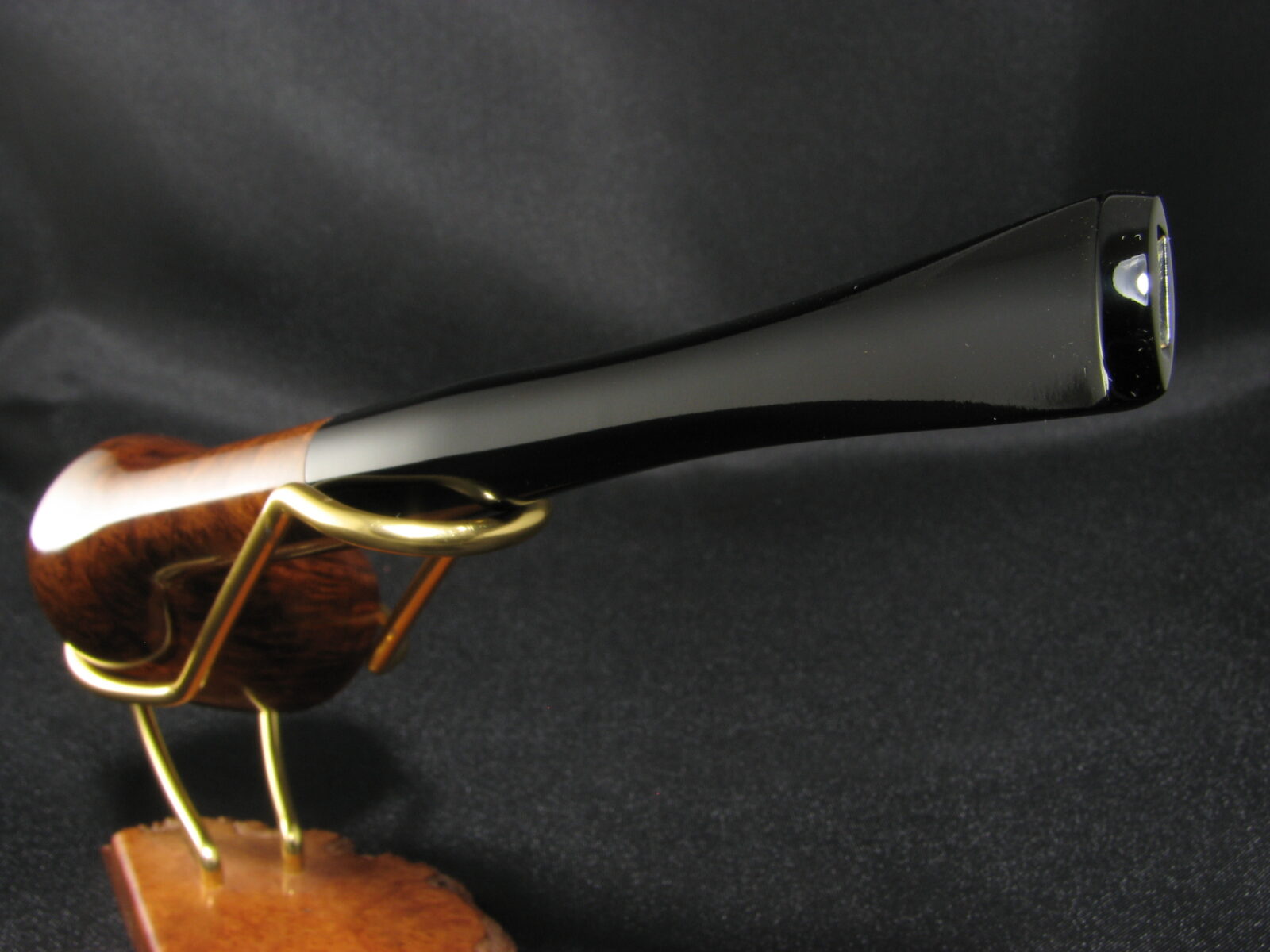
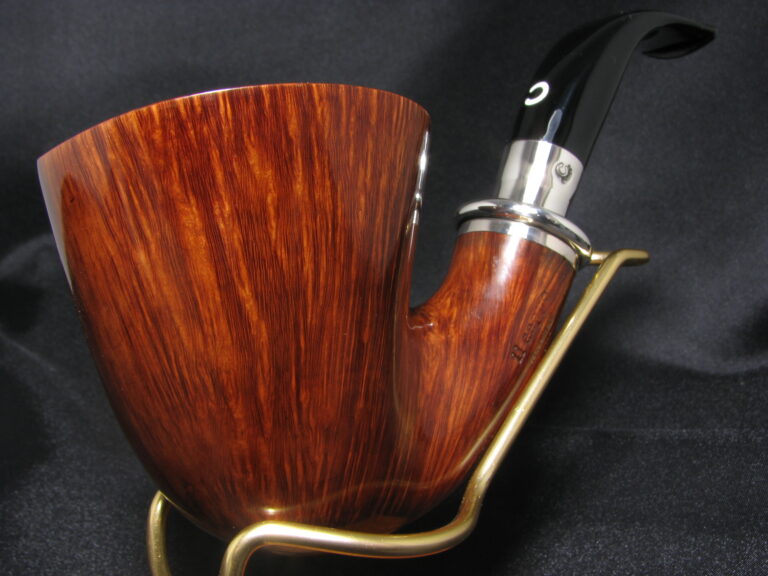
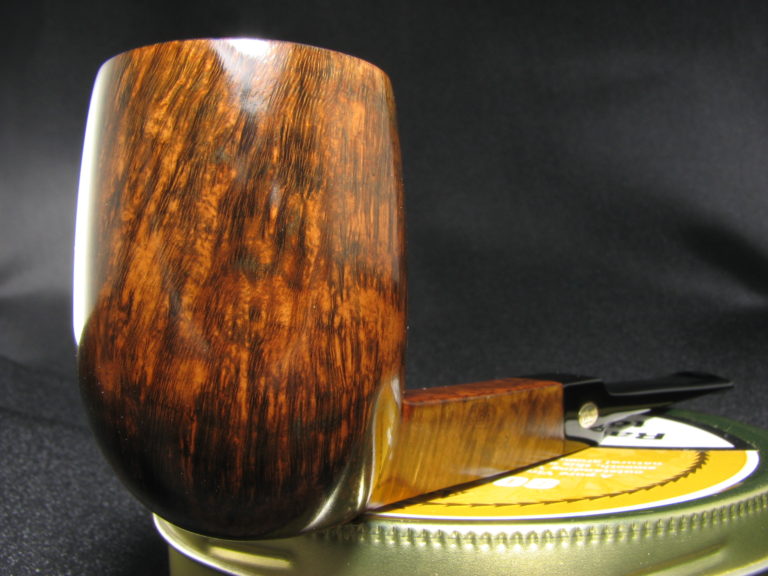
A pipe of the second Charatan’s higher grade next to the highest “Supreme”. It seems the pipe was made before 1960 – the shape number is located together with the nomenclature on the left side of the shank like it was on “family era” pipes. The encircled “L” is not a misunderstanding – Charartan’s factory started to export pipes to USA for the Lane LTD back in 1950s. A moderately smoked sample of a very stylish “cutty” shape – both a tribute to old good English clay pipes and a symbol of the succession of this tradition.

The pipe markings are “CHARATAN’S MAKE \ LONDON. ENGLAND \ SELECTED”, “86”, “L”. The length is 15.0 cm (5.9″), bowl’s height is 5.2 cm (2.05″). External diameter of the bowl is 3.3 cm (1.3″), internal diameter is 1.7 cm (0.67″). The depth is 4.4 cm (1.73″) and this pipe weights 31 gr. Briar, vulcanite stem, no filter.

Similar Posts

  • CHARATAN’S MAKE Special 91

    England, 1950s A Pre-Lane Charatan’s pipe:  the shape, the nomenclature, the logo on the stem testify unambiguously that it was born at Ruben Charatan’s factory. However, there is already a capital L in a circle (slightly faint, but it is still possible to consider). This isn’t an error: since 1955 the Charatan’s family factory exported…

  • CHARATAN’S MAKE Distinction

    England, 1960-70s A very well-preserved example of the craftsmanship of Charatan’s carvers from the so-called “second Lane period” — spanning from the mid-1960s to the mid-1970s. Among the range of Charatan’s Distinction line, this piece confidently holds a high position—surpassed only by the top-tier Selected and Supreme grades. Pipe markings “L”, “CHARATAN’S MAKE \ LONDON….

  • CHARATAN’S MAKE 381DC

    England The competition between Dunhill and Charatan was like a discussion what is more important – a form or a content. Or it would be better to say: the grain or the shape. While Dunhill pipes all were carved on a strictly set curve, Charatan masters preferred to allow a deviation from the traditional shape…

  • G. W. SIMS freehand

    England, 1970s This is one of the most striking and expressive freehand pipes by G.W. Sims that we’ve had the pleasure of handling. A truly organic blend of form, briar grain, and luxurious plateau—unsurprising for an artisan often referred to as the ‘most Danish of English pipe makers’ and the father of English freehands. At…

  • JAMES UPSHALL DS Tilshead

    England, 1980s Desmond Sautter was a reputable and successful London tobacconist based in Mayfair, able to commission pipes from the most famous English manufacturers. These makers were happy to add extra markings with the initials DS on the pipes—like this Tilshead pipe by James Upshall. As Ken Barnes, co-founder of James Upshall, recalls, the company…

Leave a Reply

Your email address will not be published. Required fields are marked *