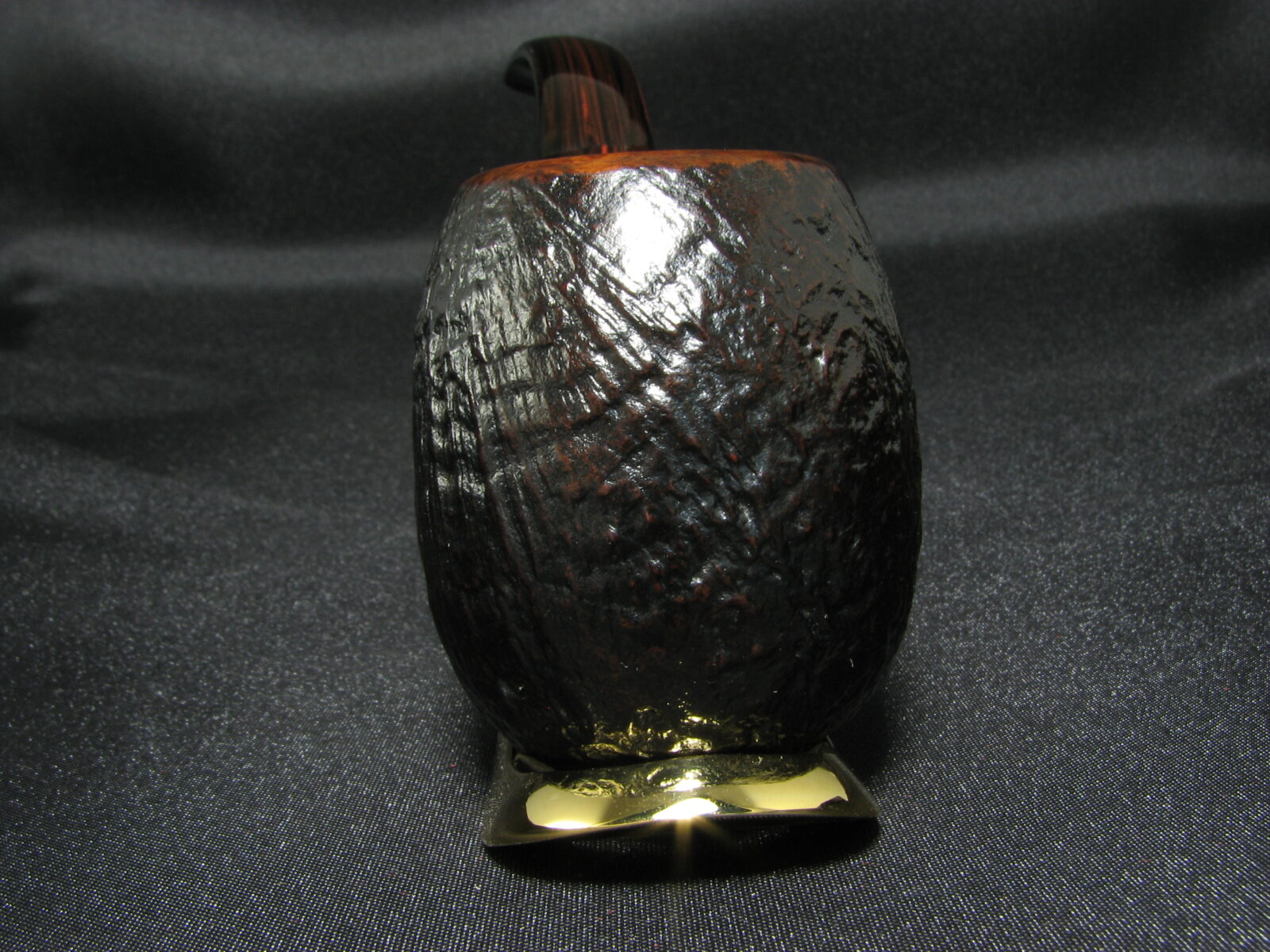
DUNHILL Cumberland 52264, 1980

DUNHILL Cumberland 52264, 1980

England, 1980

The “Cumberland” series is relatively young in comparison to other lines – it was introduced in 1979 and named in honor of Cumberland Street – the street where production and warehouse capacities of the company existed comfortably for many years. But such brindle ebonite stems (“cumberland” stems – also a Dunhill’s invention!) make the series one of the best sellers and an objects of a highest attention of Dunhill admirers.

The pipe markings are “52264”, “DUNHILL CUMBERLAND \ MADE IN ENGLAND 20”. The length is 14.5 cm (5.71″), bowl’s height is 5.4 cm (2.12″). External diameter of the bowl is 4.3 cm (1.69″), internal diameter is 2.0 cm (0.79″). The depth is 4.3 cm (1.69″) and this pipe weights 67 gr. Briar, cumberland stem, no filter. The chamber has normal moderately smoked wear without any major issues.

Similar Posts

  • DUNHILL Shell 6163

    England, 1978 The sandblast finish is considered to be invented by Dunhill, at least this fact was confirmed with patents of 1917 – in Great Britain and 1920 – in the USA. From the beginning Algerian briar was used for blasted pipes as much softer and providing deeper and more attractive finish. Although in 1960-70…

  • DUNHILL Nine Drummers Drumming 5103

    England, 2001 On the twelfth day of ChristmasMy true Love sent to meTwelve lords a-leapingEleven ladies dancingTen pipers pipingNine drummers drummingEight maids a-milkingSeven swans a-swimmingSix gees a-layingFive gold ringsFour calling birdsThree French hensTwo turtle dovesAnd a partridge in a pear tree First Dunhill Christmas pipe appeared in 1980 and every year Dunhill admirers have an…

  • DUNHILL Shell 5102

    England, 1991 A really large (“5” was one of the largest group size in the serial production), really traditional (02 – is one of the oldest and respected Dunhill shapes) and really impressing by its size, shape, grain and condition Dunhill Shell from 1991.

  • DUNHILL Root Briar 42081, 1978

    England, 1978 Initially Dunhill didn’t pay any special attention to a grain of briar. Perhaps, the public opinion had not been ready yet to a “straight grain” and material of early Bruyere pipes didn’t differ by a remarkable grain. But in 1931 Root Briar series was started. The pipes were made of Corsican briar, wonderful…

  • DUNHILL Bruyere bamboo

    England, 1998 The idea of using bamboo came from the WWII times when supply of briar to the United kingdom faced a really dramatical shortage and the English manufacturers looked for any possibility to use different materials if not for the complete pipe making, but at least to compensate for the deficit of briar. Competent…

Leave a Reply

Your email address will not be published. Required fields are marked *