
JEAN MASSON (Ma Colombe)
$66.00
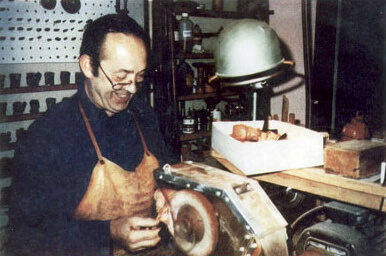
We have already featured many pipe makers on our website who came to the art of pipe-making from what were, at times, completely unexpected fields of human endeavour — engineers, diplomats, and military personnel. French welder Jean Masson took up woodworking in his thirties; in 1971, he took over the Jules Guichon pipe workshop, from whom he received his first lessons in crafting classic shapes, whilst Denis Vincent taught him the finer points of sculptural carving.
Di seguito la traduzione in italiano / Italian translation is below
Description
At the height of his career, the master craftsman produced up to 1,000 pipes a year in classic shapes and freehands, using high-quality Moroccan briar, often with plateau and typically featuring fine vertical grain; however, his most popular pieces are his sculpted pipes depicting famous figures, including Serge Gainsbourg, Cyrano de Bergerac, Prince Charles, President Kennedy, and even Vladimir Lenin for the more adventurous customers. The process began with a lengthy study of the chosen character, followed by up to 100 hours spent crafting the model. The finished model was placed in a pantograph alongside two blanks, and as the craftsman guided a probe along the model, the machine carved out copies of it. Of course, the fine details and facial features were then added by hand.
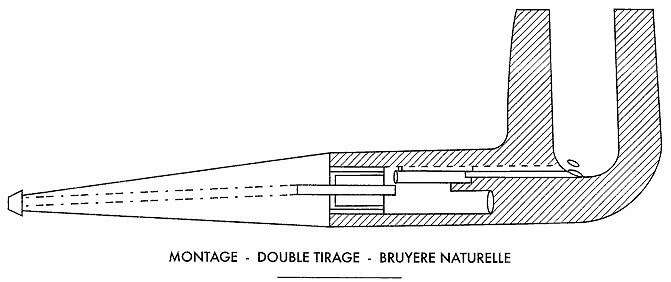
Another source of pride for the master is his own patented condensate collection system; we found the relevant diagram in a detailed article about Jean Masson on fumeursdepipe.net (https://www.fumeursdepipe.net/pipiersMmasson.htm).
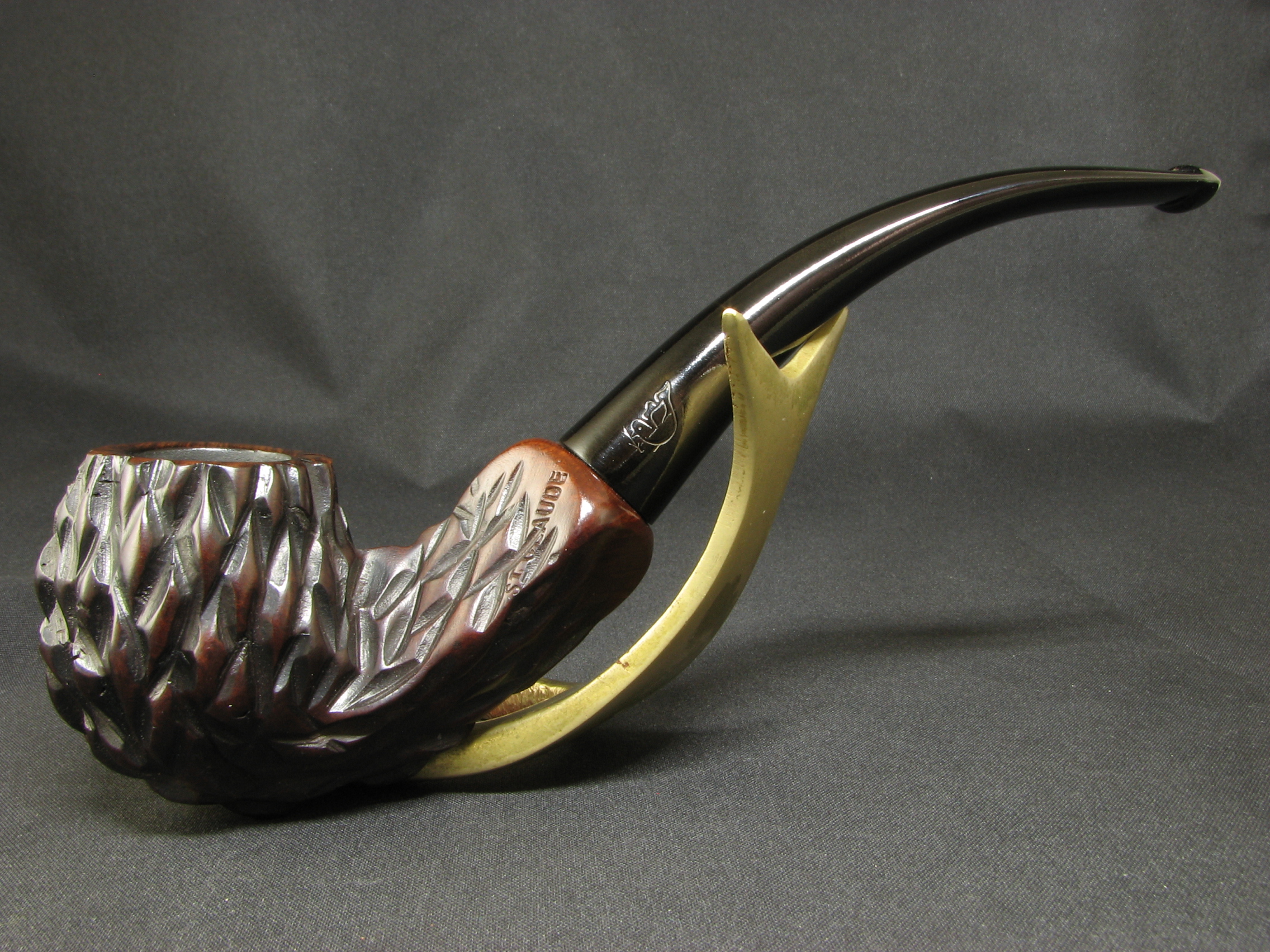
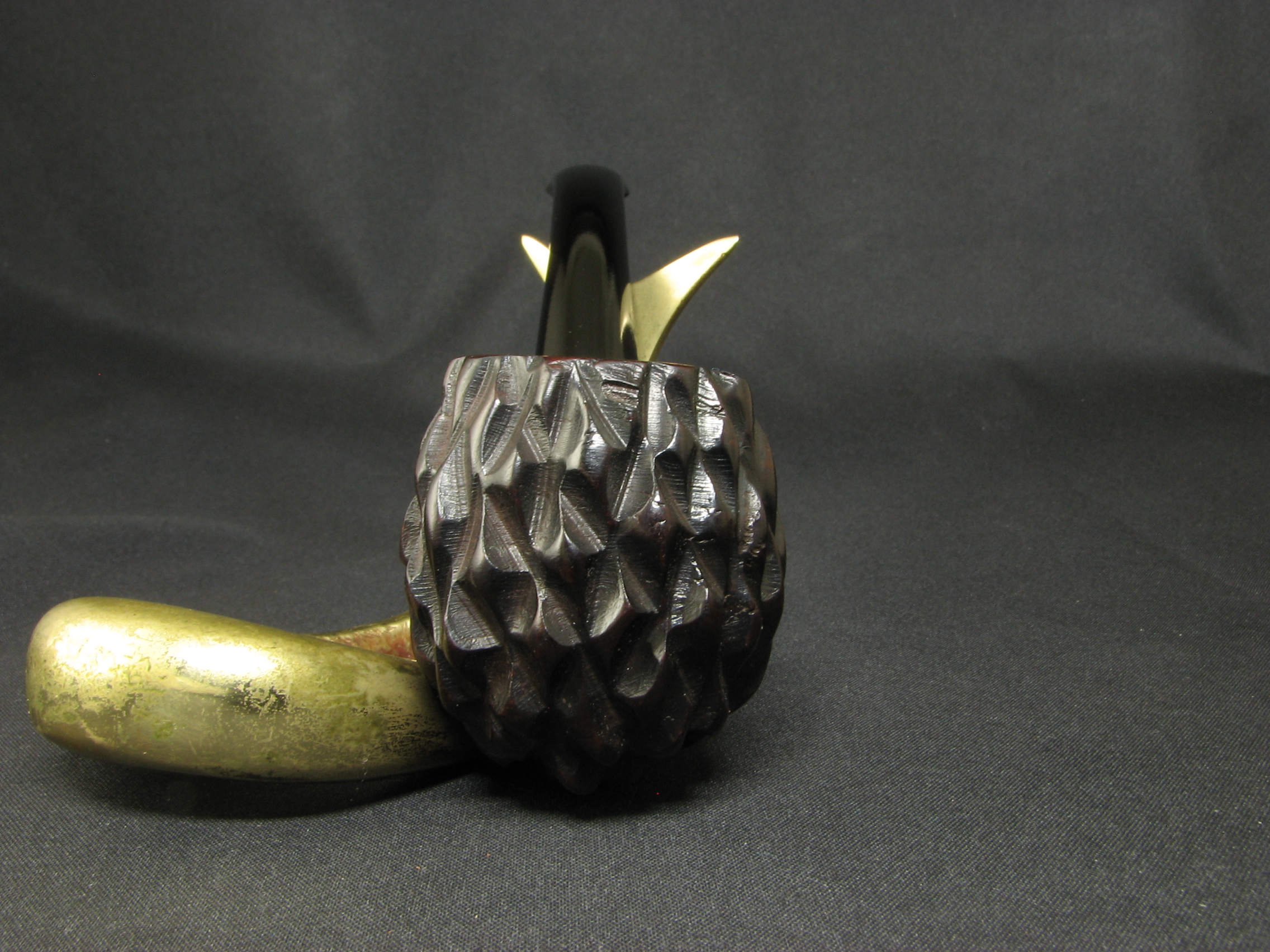
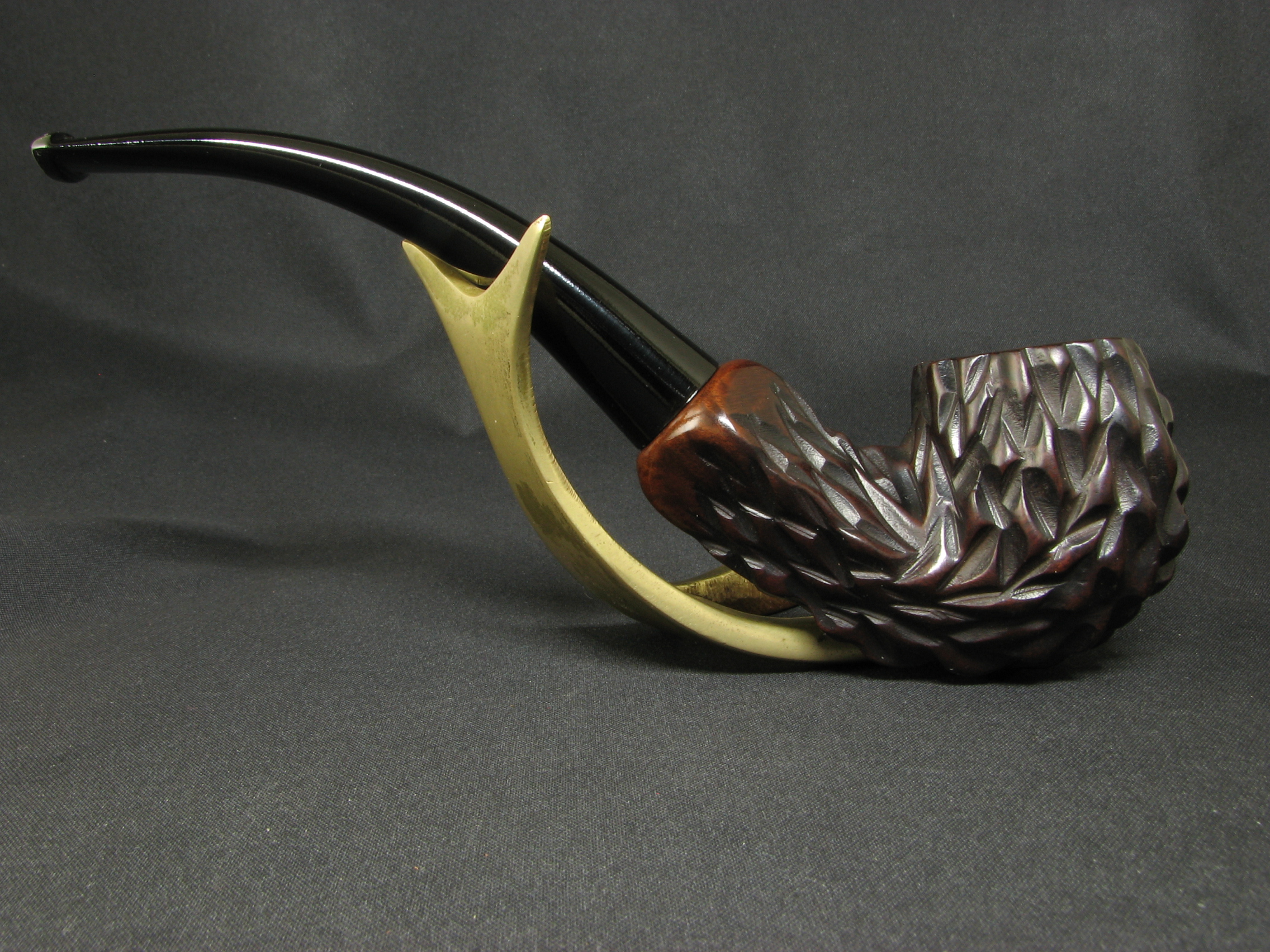
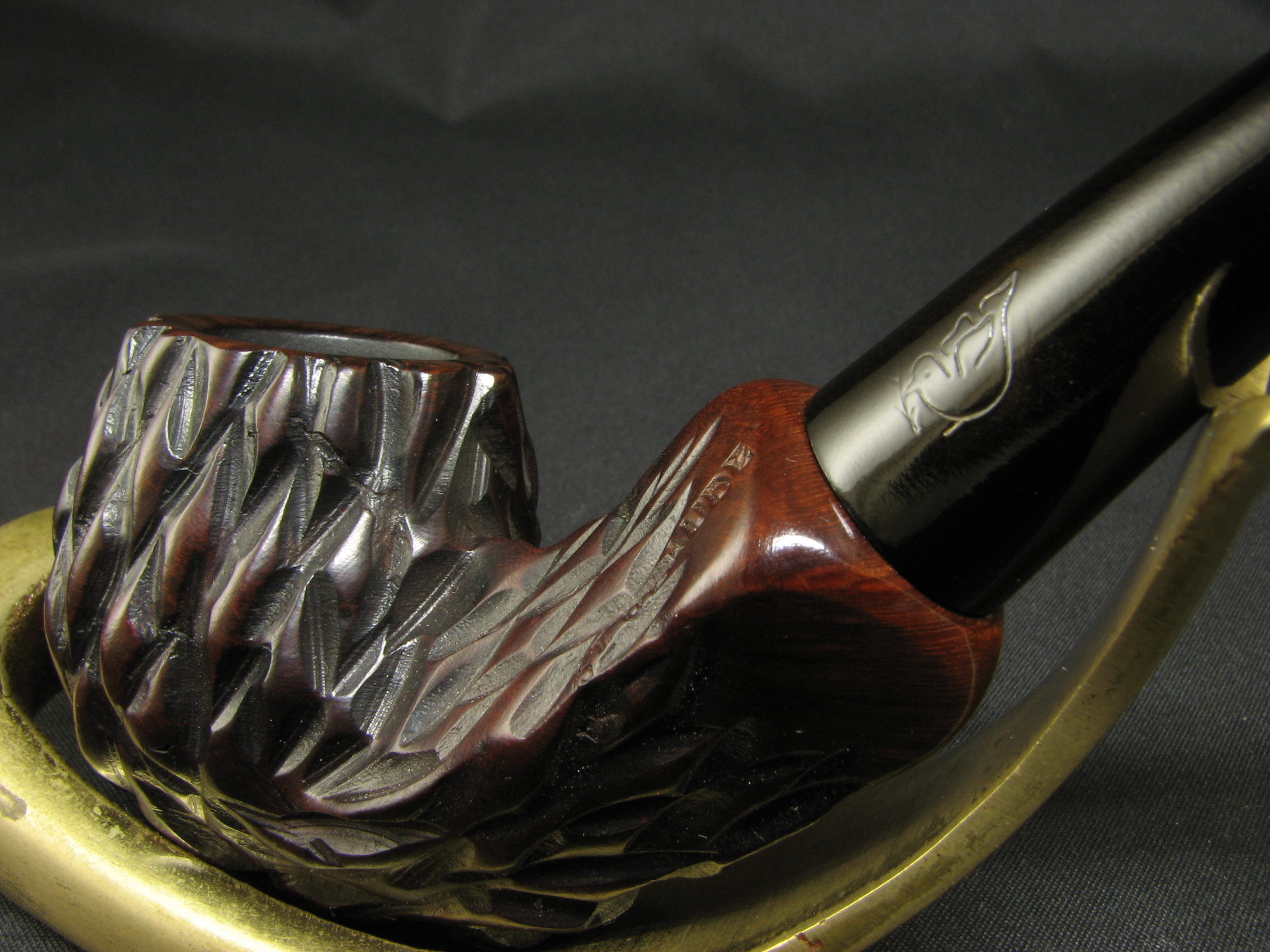
We would classify today’s pipe as belonging to the master’s early period: it is not yet a sculptural portrait, but the carving is already very fine, and the logo is present on the mouthpiece, while the bowl is marked simply with “St. Claude”, without any further details.
Pipe markings: “ST. CLAUDE”
Length 13.8 cm (5.43″)
Bowl height 4.2 cm (1.65″)
Outside diameter 3.7 cm (1.46″)
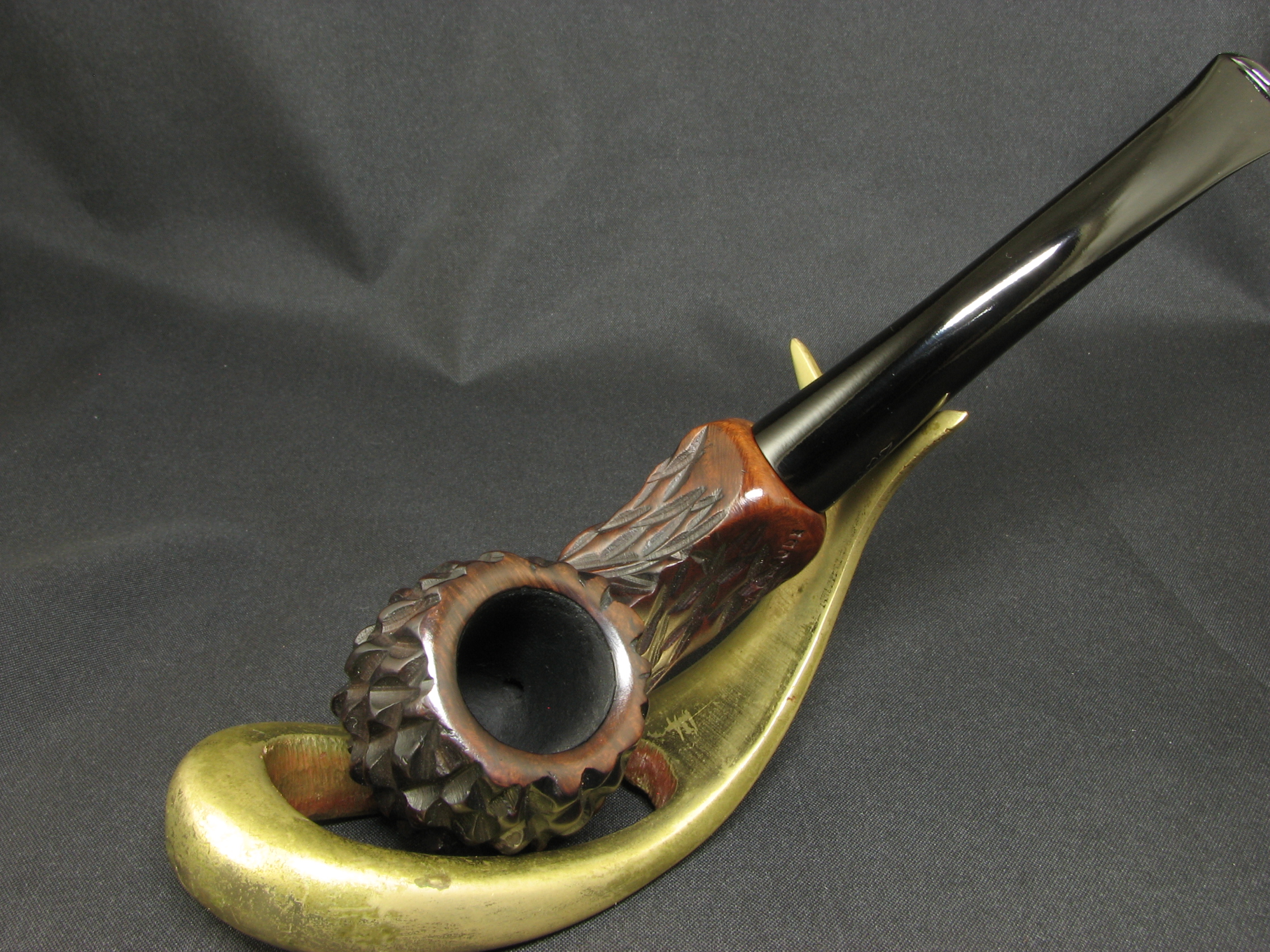
Chamber diameter 1.8 cm (0.71″)
Chamber depth 3.1 cm (1.22″)
Weight 38 g
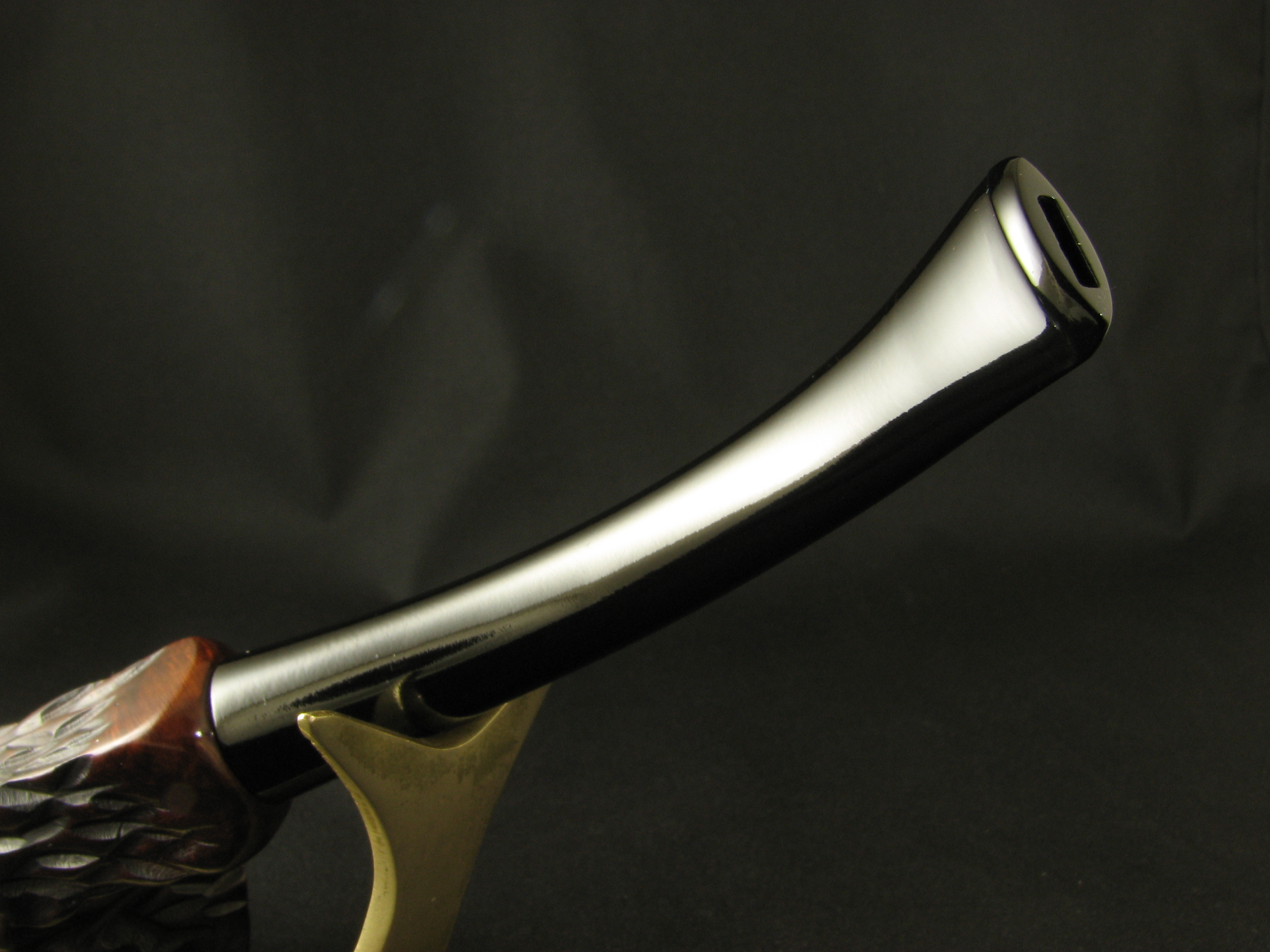
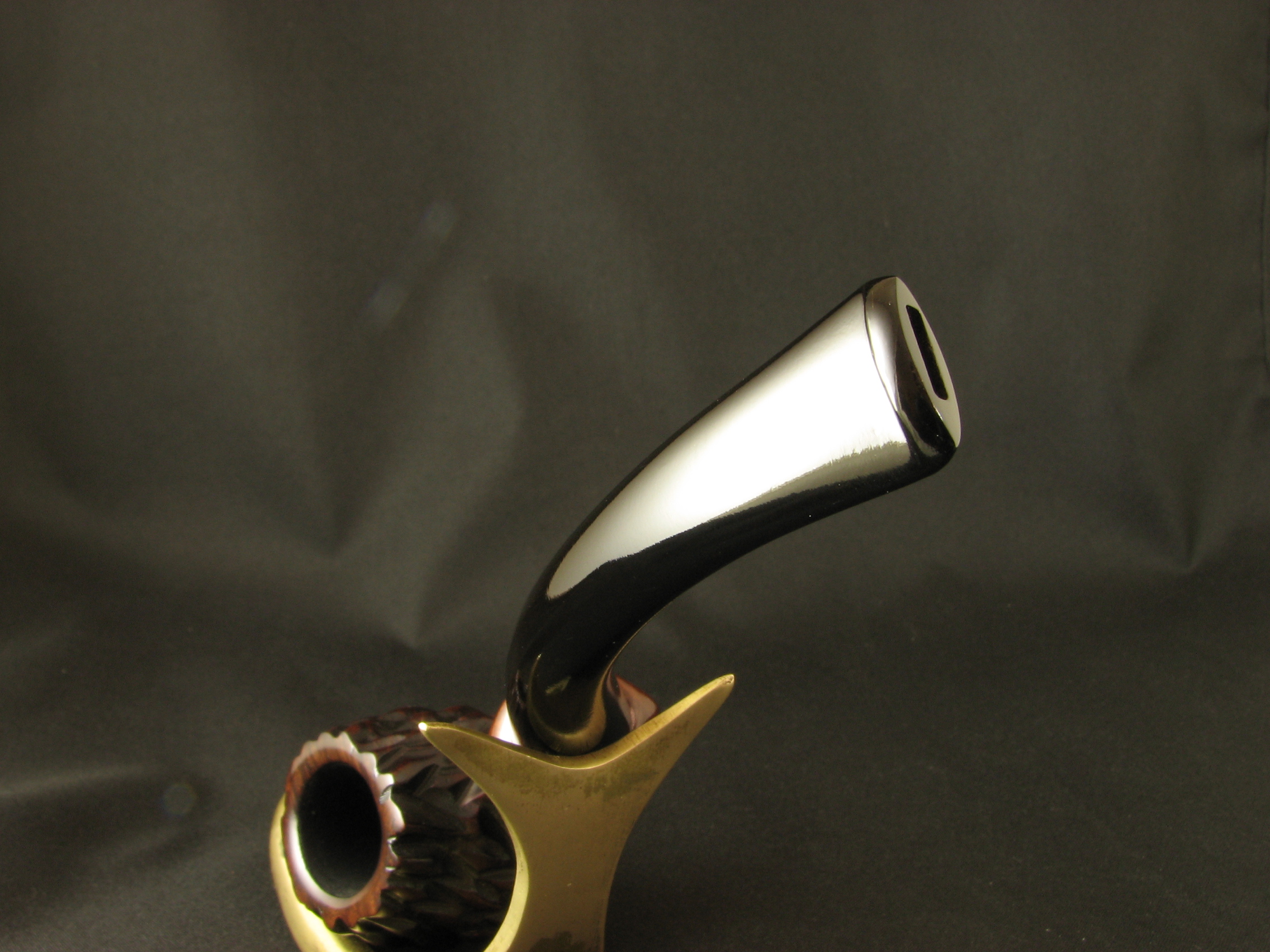
Briar, vulcanite stem, no filter.
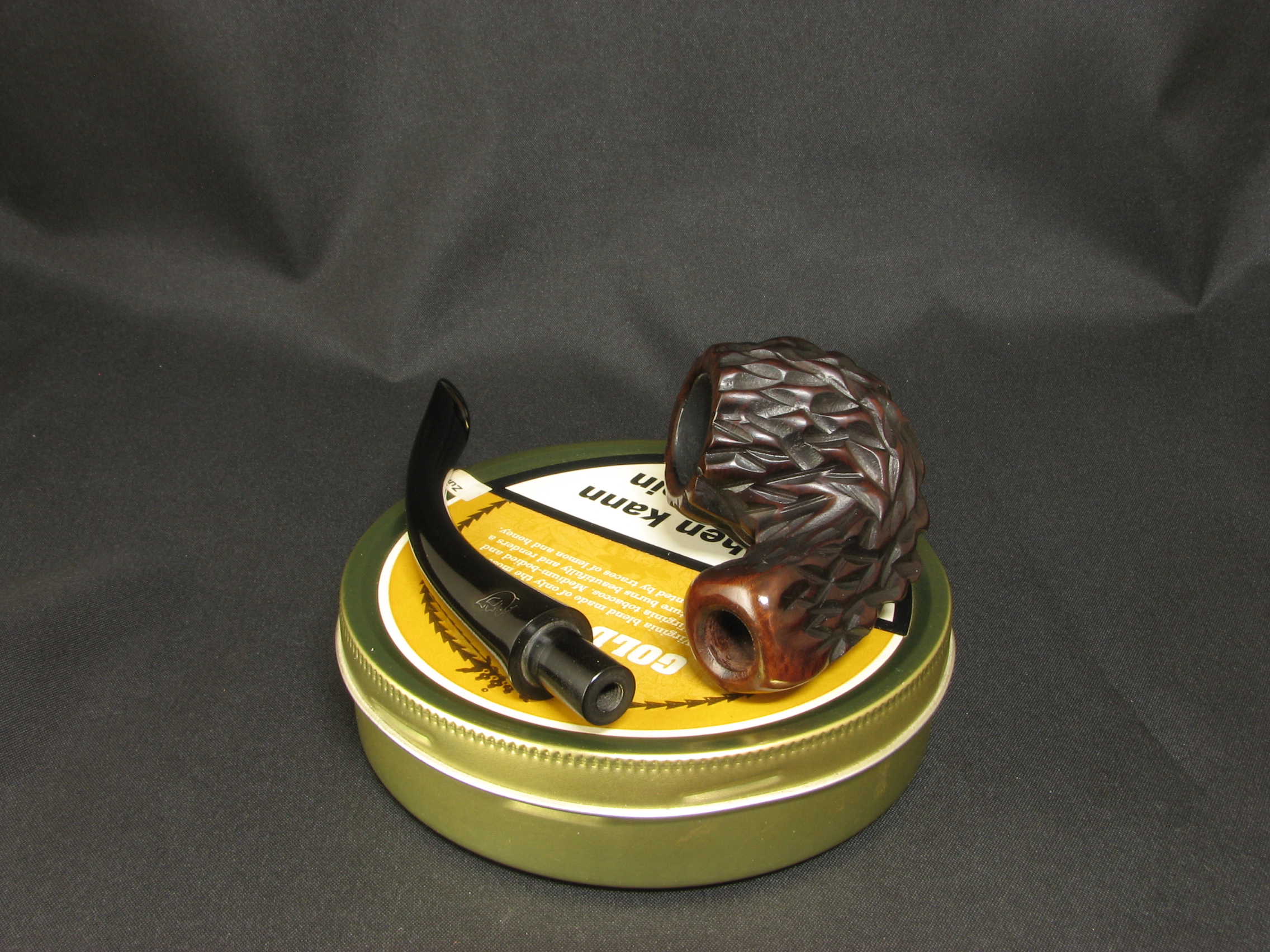
The pipe has been thoroughly cleaned, polished, sanitised, and is now ready for a new life.
Sul nostro sito abbiamo già presentato numerosi pipemaker che si sono avvicinati all’arte della pipa partendo da ambiti talvolta del tutto inaspettati dell’attività umana — ingegneri, diplomatici e personale militare. Il saldatore francese Jean Masson iniziò a dedicarsi alla lavorazione del legno all’età di trent’anni; nel 1971 rilevò il laboratorio di pipe Jules Guichon, dal quale ricevette le prime lezioni nella realizzazione delle forme classiche, mentre Denis Vincent gli insegnò i segreti più raffinati dell’intaglio scultoreo.
All’apice della sua carriera, il maestro produceva fino a 1.000 pipe all’anno in forme classiche e *freehands*, utilizzando radica marocchina di alta qualità, spesso con plateau e generalmente caratterizzata da una venatura verticale molto fine; tuttavia, i suoi pezzi più popolari sono le pipe scolpite che raffigurano personaggi famosi, tra cui Serge Gainsbourg, Cyrano de Bergerac, il Principe Carlo, il Presidente Kennedy e persino Vladimir Lenin, per i clienti più audaci. Il processo iniziava con un lungo studio del personaggio scelto, seguito da fino a 100 ore dedicate alla realizzazione del modello. Il modello finito veniva poi collocato nel pantografo insieme a due grezzi e, mentre l’artigiano guidava una sonda lungo il modello, la macchina ne ricavava le copie. Naturalmente, i dettagli fini e i tratti del volto venivano successivamente rifiniti a mano.
Un ulteriore motivo d’orgoglio per il maestro è il suo sistema brevettato di raccolta della condensa; abbiamo trovato il relativo schema in un articolo dettagliato dedicato a Jean Masson su fumeursdepipe.net (https://www.fumeursdepipe.net/pipiersMmasson.htm).
Classificheremmo la pipa di oggi come appartenente al periodo iniziale del maestro: non si tratta ancora di un ritratto scultoreo, ma l’intaglio è già molto fine e il logo è presente sul bocchino, mentre sul fornello compare semplicemente la dicitura “St. Claude”, senza ulteriori dettagli.
Marcature della pipa: “ST. CLAUDE”
Lunghezza 13,8 cm
Altezza della testa 4,2 cm
Diametro della testa 3,7 cm
Diametro del fornello 1,8 cm
Profondità del fornello 3,1 cm
Peso 38 g
Radica, bocchino in ebanite, senza filtro.
La pipa è stata accuratamente pulita, lucidata, sanitizzata ed è ora pronta per una nuova vita.
Reviews
There are no reviews yet.