STANWELL De Luxe freehand
Denmark 1950-60s
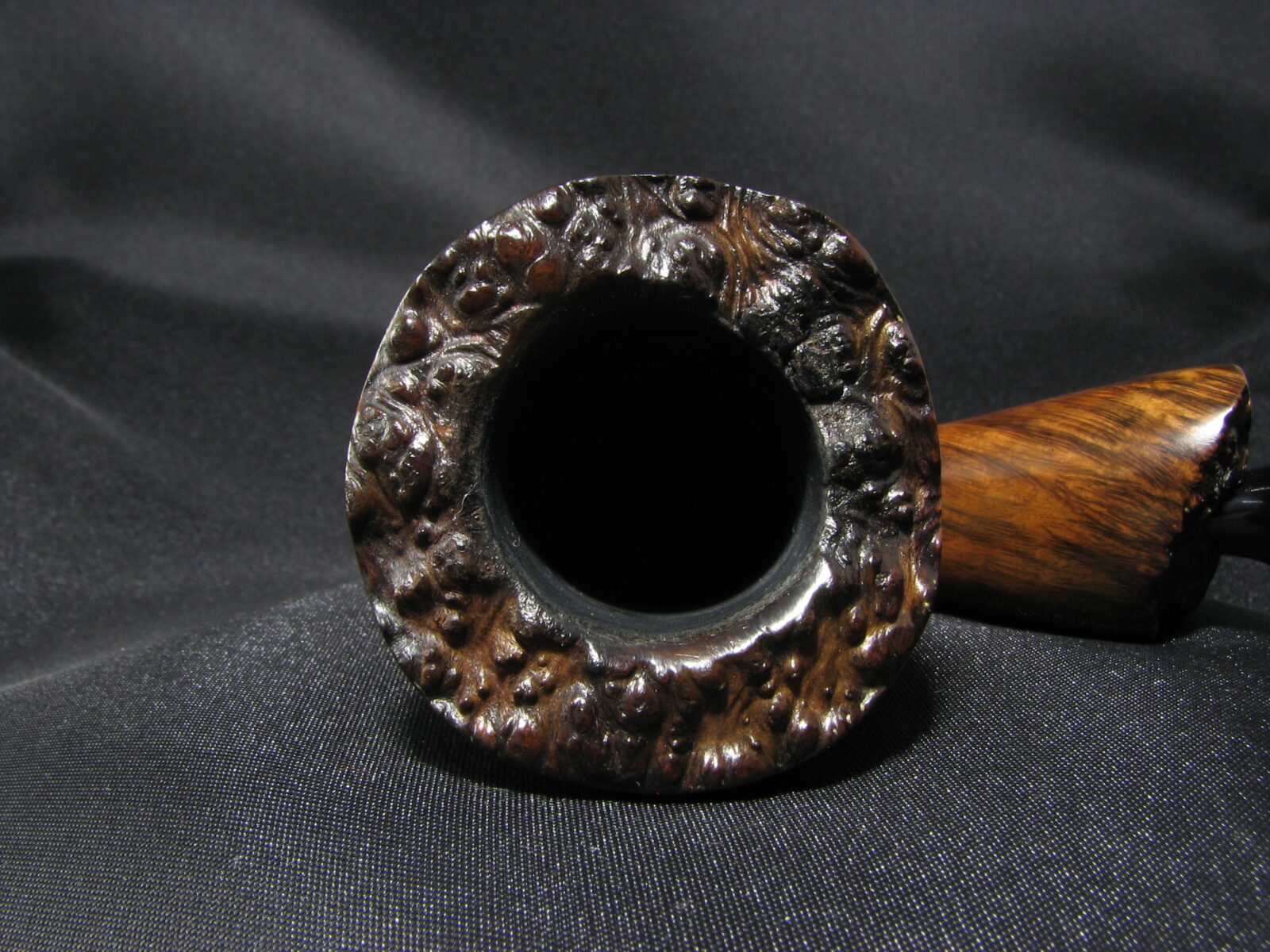
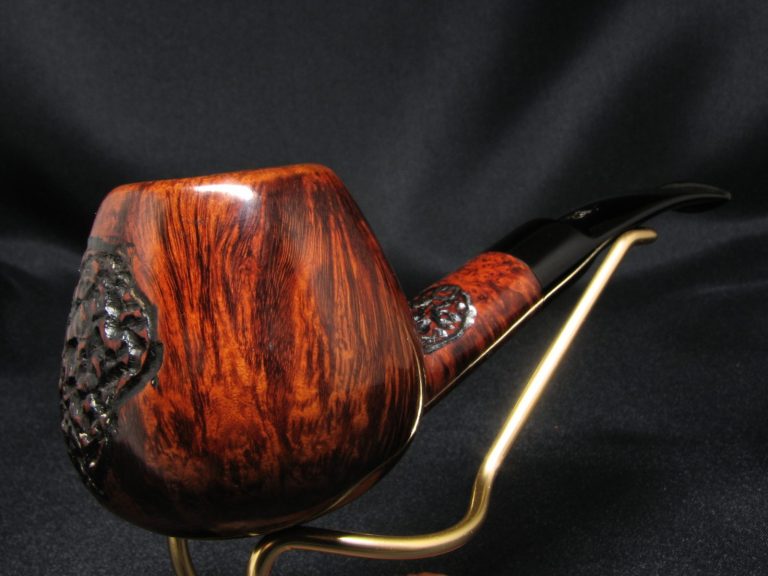
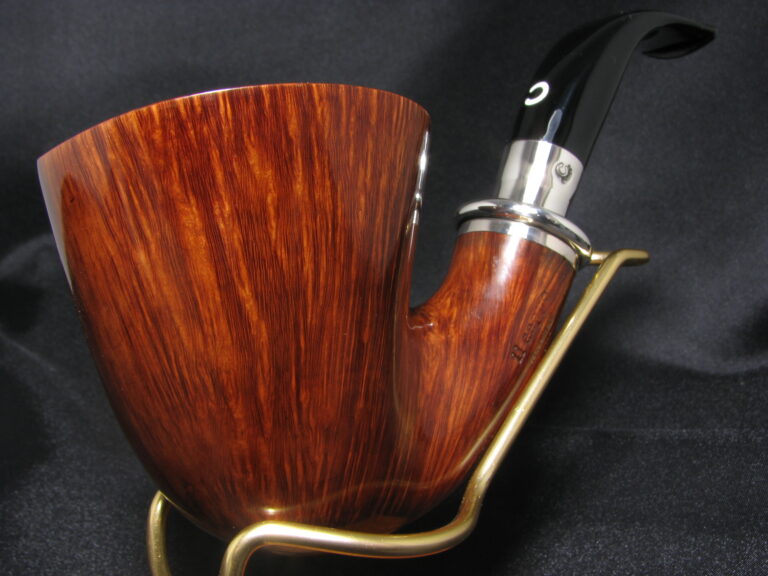
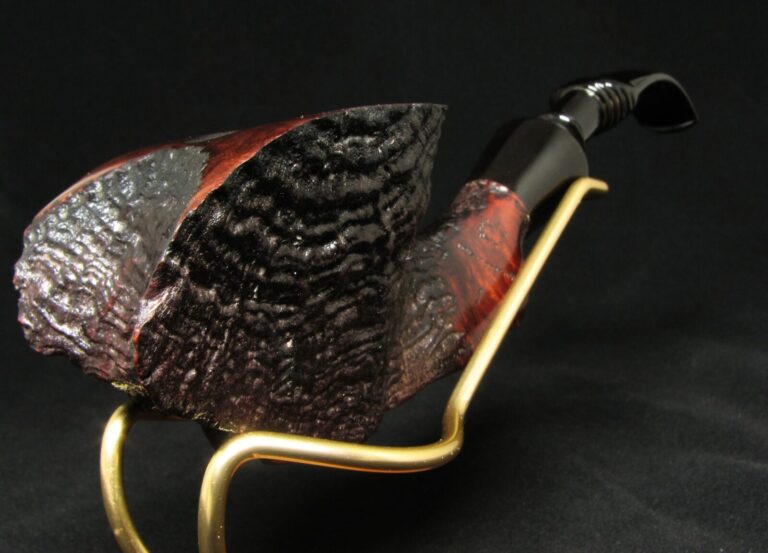
A really exceptional Stanwell freehand pipe from the registration era! The registration number was assigned to Stanwell in 1948 and was stamped on Stanwell pipes until the beginning of the 1970s. The pipe doesn’t bear any shape number what is very uncommon for Stanwell. Absence of this number may mean that the pipe was made by hand by a leading carver without references to any catalogs and standard shapes (like it was at Charatan’s and other manufactories). Some experts (see Pipedia) claim all freehands were cut by Paul Hansen, thus most probably this pipe was carved by Paul as well.
The pipe markings are “STANWELL \ REGD N 969-48 \ de Luxe \ MADE IN DENMARK”. The length is 14.0 cm (5.51″), bowl’s height is 6.1 cm (2.4″). External diameter of the bowl is 4.4 cm (1.73″), internal diameter is 2.1 cm (0.83″). The depth is 4.8 cm (1.89″) and this pipe weights 55 gr. Briar, vulcanite stem (slightly patched, you may identify the track under a bright light), no filter. The chamber has been protected with a break-in coat.




Hi Andy,
I suppose your pipe looks like this one, correct? https://faridunhill.com/products/danish-estates-stanwell-de-luxe-sandblasted-pot-845
In this case 845 is the shape number. By the way many Stanwell shape numbers were carefully collected and described on pipedia: https://pipedia.org/wiki/Stanwell_Shape_Numbers_and_Designers
At the same time the “Registration Number (REGD N) 969-48” was a kind of a “patent number” and has been stamped on Stanwell pipes until early 1970s.
So your pipe was made definitely not earlier than in 1970s, and very probably – at the end of the XX century (it’s a guess of course). Unfortunately it’s difficult to tell more. But please feel free to contact me in case of any additional questions.
The very best regards
Hello there,
I have recently bought a Stanwell De Luxe 845 sandblast pipe. Could you tell me whether this is an old, or a vintage pipe?
Very best wishes,
Andy Freer.
Is this pipe for sale
It’s sold.
I just purchased this pipe. Does anyone have any info on this pipe’s history or its current selling price? Thanks.
Hi Broderick,
it’s difficult to add something new to this article. Generally if the pipe has a “REGD N” nomenclature it was made not later than in the early 1970s. There’s no fixed price for such rare pipes, but in my understanding it should cost more than 100 dollars .
The very best regards,