PREBEN HOLM Traditional 200 unsmoked

PREBEN HOLM Traditional 200 unsmoked

Denmark, 1960-70s

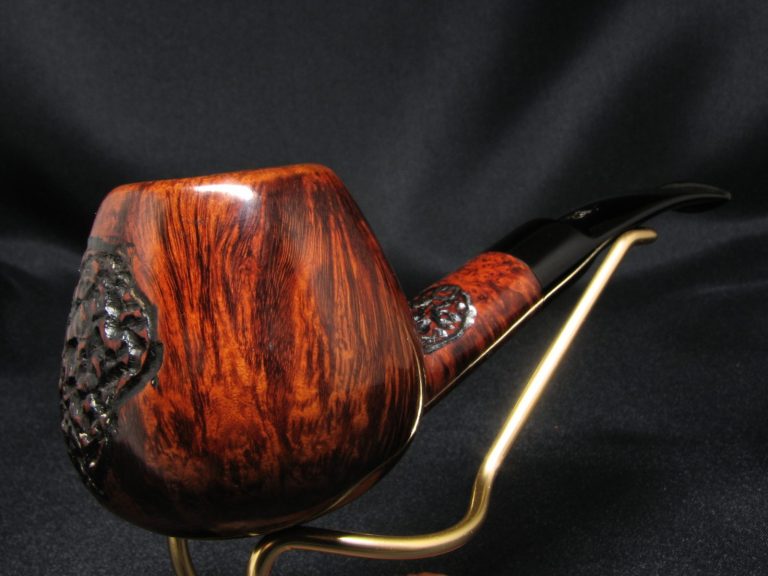
An amazing large, heavy and still unsmoked pipe made by Danish genius Preben Holm in 1960-70s. You still may see the artisan’s original bowl coat in the chamber. The condition is practically ideal, we may remark only slight discoloration of the logo on the stem.

The pipe marking is “PREBEN HOLM \ TRADITIONAL \ 200 \ HANDMADE \ IN \DENMARK”. The length is 18.0 cm (7.09″), the bowl’s height is 5.9 cm (2.32″). External diameter of the bowl is 5.1 cm (2.0″), internal diameter is 2.3 cm (0.9″). The depth is 5.1 cm (2.0″) and this pipe weights 88 gr. Briar, vulcanite stem, no filter.

Similar Posts

  • T. CRISTIANO Alfa 1 unmarked

    USA, 1980-90s The pipe is from the T. Cristiano’s old stock. It was shaped and drilled approximately in the 1980s, but finished nowadays. Tomas Cristiano was the Italian by origin, his family emigrated to the USA in 1968 and several generations of Cristiano are involved into production and marketing of wonderful briar pipes. Thomas began…

  • CAMINETTO Business 181 KS

    Italy ​A product of cooperation of three Italians: Guiseppe Ascorti, Luigi Radice and Gianni Davoli. The brand was produced in 1970’s and was very popular on both sides of Atlantic ocean. The name Caminetto comes from “a small chimney” (camino in Italian). Very unusual shape, amazing blast. We can only remark a bit higher drilling…

  • HOLTORP

    Denmark, 1960s Who knows how would look modern smoking pipes without the incomparable influence of the “Danish miracle” and many efforts performed by Danish artisans and resellers such as Pipe-Dan. P. Holtorp was one of young talents working for Pipe-Dan in 1960s among with Sven Knudsen, Gert Holbek, Axel Svend Celius, Tom Eltang. “…the majority…

  • Lord Nelson unsmoked

    France, 1980-90s, unsmoked A nicely made (and still unsmoked!) French bent dublin pipe made approximately in the last decades of the XX century. Some sources claim the “Lord Nelson” brand was made by Comoy’s in England but the lily logo on the stem indicates its French origin, the most probably Chacom or some other St…

Leave a Reply

Your email address will not be published. Required fields are marked *