KAYWOODIE Custom Grain

KAYWOODIE Custom Grain

England

The brand name Kaywoodie was invented in 1919. There were Kaufman Brothers & Bondy (KBB) in USA and Kay-Woodie comes from the 1st letter of Kaufman + a hint that their pipes are wooden (briar) indeed.

By the way during World War II, when it was hardly possible to obtain Mediterranean briar KBB have initiated a project of growing domestic briar (mission briar or manzanita). The smoking qualities were not as good as briar but anyway this meanwhile solution was better than other replacement materials used at the same time in the UK. Of course after the end of war the project was stopped.

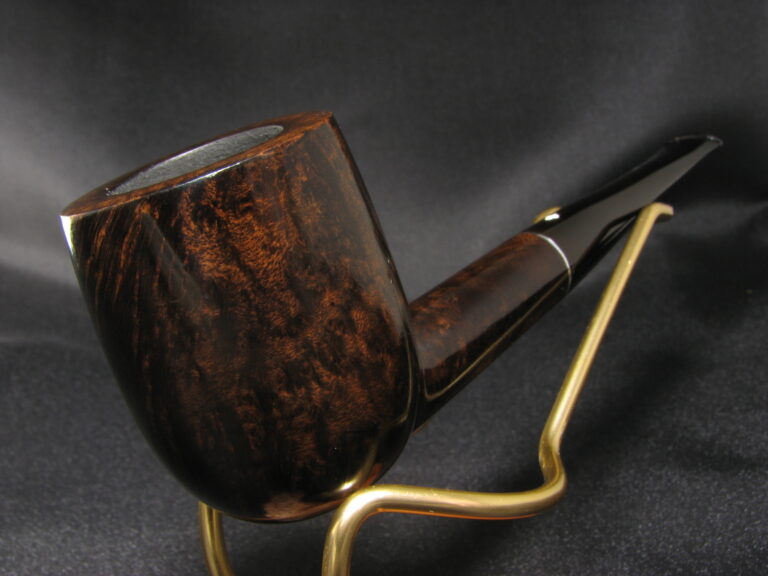
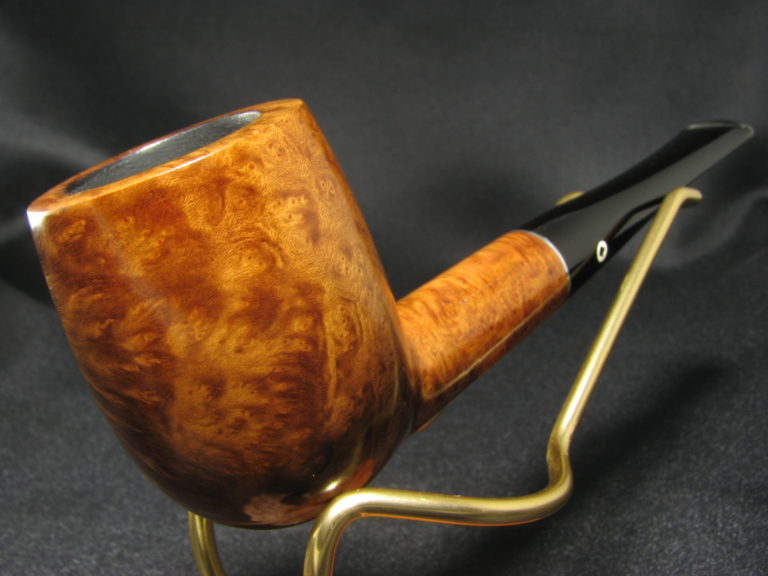
Our today’s pipe is interesting due to two reasons: it’s a graded pipe (Custom Grain followed Flame Grain in Kaywoodie’s catalogues). And it’s an English made pipe. Therefore the quality and smoking characteristics are English indeed!

The pipe markings are “KAYWOODIE \ Custom Grain”, “LONDON ENGLAND \ 39”. The length is 15.2 cm, bowl’s hight is 4.9 cm. External and internal diameters of the bowl are 3.3 cm and 2.2 cm. The depth is 3.8 cm and this pipe weights 41 gr. Briar, vulcanite stem, no filter.

Similar Posts

  • KAYWOODIE Standard 22

    USA, 1950s This pipe seems to be one of the first Kaywoodie Standard pipes: the series was introduced around 1950 and is still produced, but note the clover logo located on the top of the stem and the 4-hole stinger. That testifies undoubtedly that the pipe was made in the early 1950s the latest, before…

  • KAYWOODIE Super Grain 29

    USA, 1930-50s Kaywoodie pipes are well known and respected as relatively inexpensive, reliable and collectable smokers, it’s perhaps the most collectable and well explored American pipe brand: each small detail can tell something significant about the pipe’s age and history. And this sample is very interesting indeed: this is the early Super Grain Kaywoodie (“Super…

  • KAYWOODIE Super Grain 61

    USA, 1950s We restored the same 1950s KAYWOODIE Super Grain 61 ‘Streamliner’ pipe nearly eight years ago. And now, through a twist of fate, we have its twin—nearly identical in dimensions (within 1 mm), the same briar, the same two holes drilled at the bottom of the chamber to the air channel, and carrying the…

Leave a Reply

Your email address will not be published. Required fields are marked *