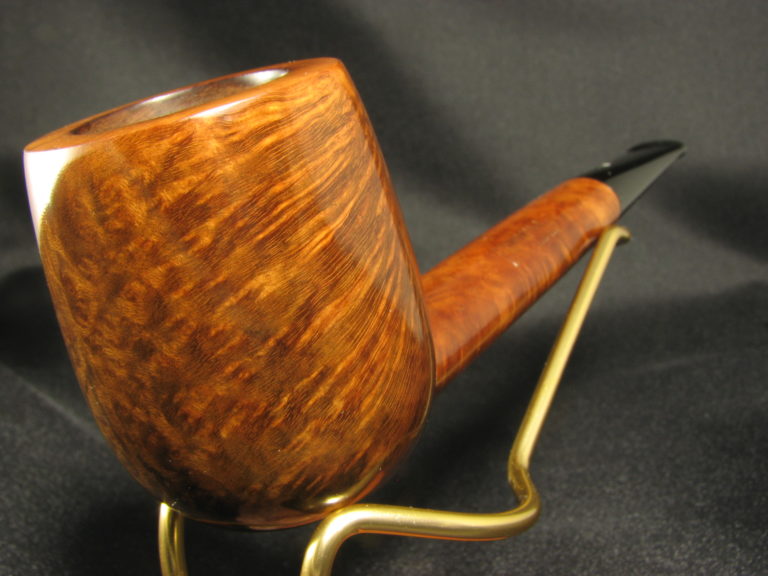
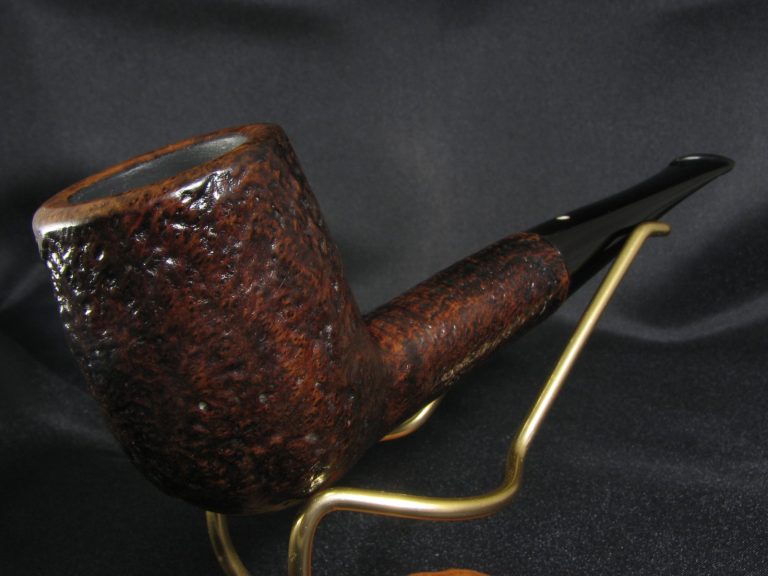
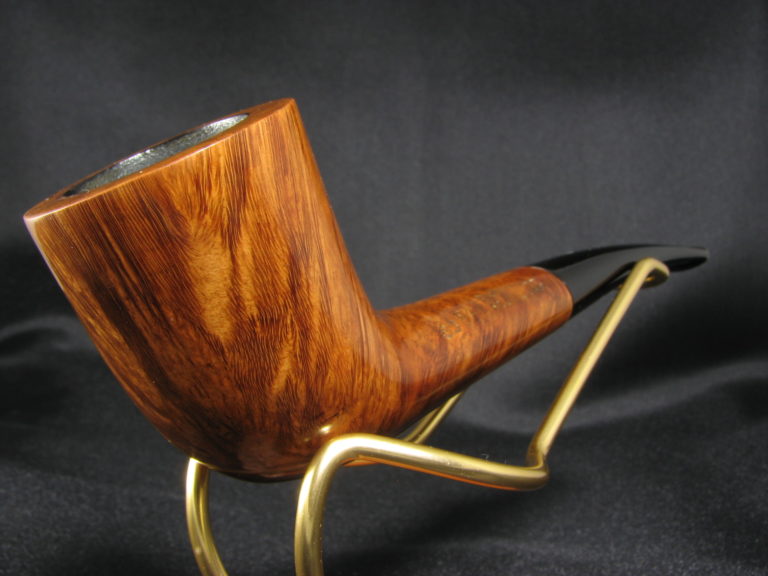
DUNHILL Shell 116

DUNHILL Shell 116 1950

England, 1950s

Normally the dating of Dunhill pipes doesn’t cause complications. In this particular case we may say for sure it’s one of the late patent period Dunhill Shell samples made in 1950, so it’s already more than 70 years old beauty now. Nevertheless the stamping “EX 511” adds some mystery and charm. Of course it’s not a shape number, Dunhill shape numbers starts from the group size designation. And our pipe doesn’t belong to the Group 5 under any circumstamces. Fortunately Steve Laug (rebornpipes.com) published recently a post dedicated to another Dunhill pipe with the “EX” stamp and performed some investigation (https://rebornpipes.com/tag/dunhill-root-briar-pipes/) . According to it “EX” means “exchange of a pipe under guarantee” and we’re pretty sure 511 is the date code (January 1951 or the exchange number 1 in 1951). That sounds quite logically: the pipe was made in 1950 and given as a replacement to a customer already i 1951 (in such a case the pipe from Steve’s blog was made in 1958 and exchanged in 1960 what’s absolutely believable). Good prooof that Dunhill is so highly respected not only due to the excellent quality, but to the top level service as well.

The pipe marking is “116”, “EX511 (?)”, “DUNHILL SHELL”, “MADE IN ENGLAND 0”, “PATENT №417574/34”, “(1)”. The same patent number you may see on the stinger (The length is 15.5 cm (6.1″), bowl’s height is 3.7 cm (1.46″). External diameter of the bowl is 2.8 cm (1.1″), internal diameter is 1.8 cm (0.71″). The depth is 3.2 cm (1.26″) and this pipe weights 18 gr. Briar, vulcanite stem (looks a very liitle bit overpolished from the shank side), aluminium tube (stinger) with some signs of a wear. The stem looks a very liitle overbuffed from the shank side.
Similar Posts

  • DUNHILL Shell Briar LBS

    England, 1962 Among with the Duhill ODA Dunhill LB (LBS) series is rather a designation for a very specific, large, at times – chubby billiard shape. According to John C. Loring “Dunhill introduced the LB shortly following the end of World War I and the shape soon became one of, if not the most popular….

  • DUNHILL Bruyere bamboo

    England, 1998 The idea of using bamboo came from the WWII times when supply of briar to the United kingdom faced a really dramatical shortage and the English manufacturers looked for any possibility to use different materials if not for the complete pipe making, but at least to compensate for the deficit of briar. Competent…

  • DUNHILL Bruyere 767, 1972-74

    England, 1972-74 In the beginning Dunhill created Bruyere. And several years (1910-1917) it was the single brand made by the company of a firm and dense Calabrian briar. And though pre WWII “bruyeres” were marked just by a letter “A” instead of model, the Bruyere series is the one of the oldest long-livers not only…

  • DUNHILL Root Briar 720, 1961-62

    England, 1961-62 Even among the highest grade Dunhill pipes you may find absolutely extraordinary and unique specimens. This Root Briar, except for two year suffixes (thus it belongs either to 1961 or to 1962), catches the eye immediately with an unusual rare shape (such a graceful semblance of an acorn), incredibly light weight (only 22…

  • DUNHILL Shell 467, 1949

    England, 1949 The sandblast finish is considered to be invented by Dunhill, at least this fact was confirmed with patents of 1917 – in Great Britain and 1920 – in the USA. From the very beginning Algerian briar was used for blasted pipes as it was much softer and provided deeper and more attractive finish….

Leave a Reply

Your email address will not be published. Required fields are marked *