DUNHILL A 107 Patent
England
It would be very helpful at least in the XXI century to have implemented a modern and comprehensive system for the smoking pipes dating and accounting. Just imagine: a pipe has a chip or a bar code, you take your scanner or a smartphone and in a second everything about the pipe is displayed on your screen: the pipe was carved from Algerian briar by uncle Paul on the Sep 14 2015, consequently it was sold by the Fortune LLC to Mr. Jameson who paid by cache and his wife isn’t aware of the real pipe’s price…
OK, let’s keep Mrs. James not aware of Mr. James expenses.
But everything else sounds really helpful and promising. But since we’re working with products from the past we have to do it in a old manner. What means: there’s no spoon… pardon, no system at all or it operates with certain unclear “periods”, like Peterson’s or Charatan’s. But even a more pedantic and systematic approach can’t avoid some mistakes or inacuracy. First of all due to human factor. Sometimes – due to historical shocks.
Dunhill pipes without the year suffix are a very interesting example of that. Of course the pre 1921 (carved before the year suffix stamping was introduced) are very rare and too expensive now. The subsequent pipes should be analyzed separately.
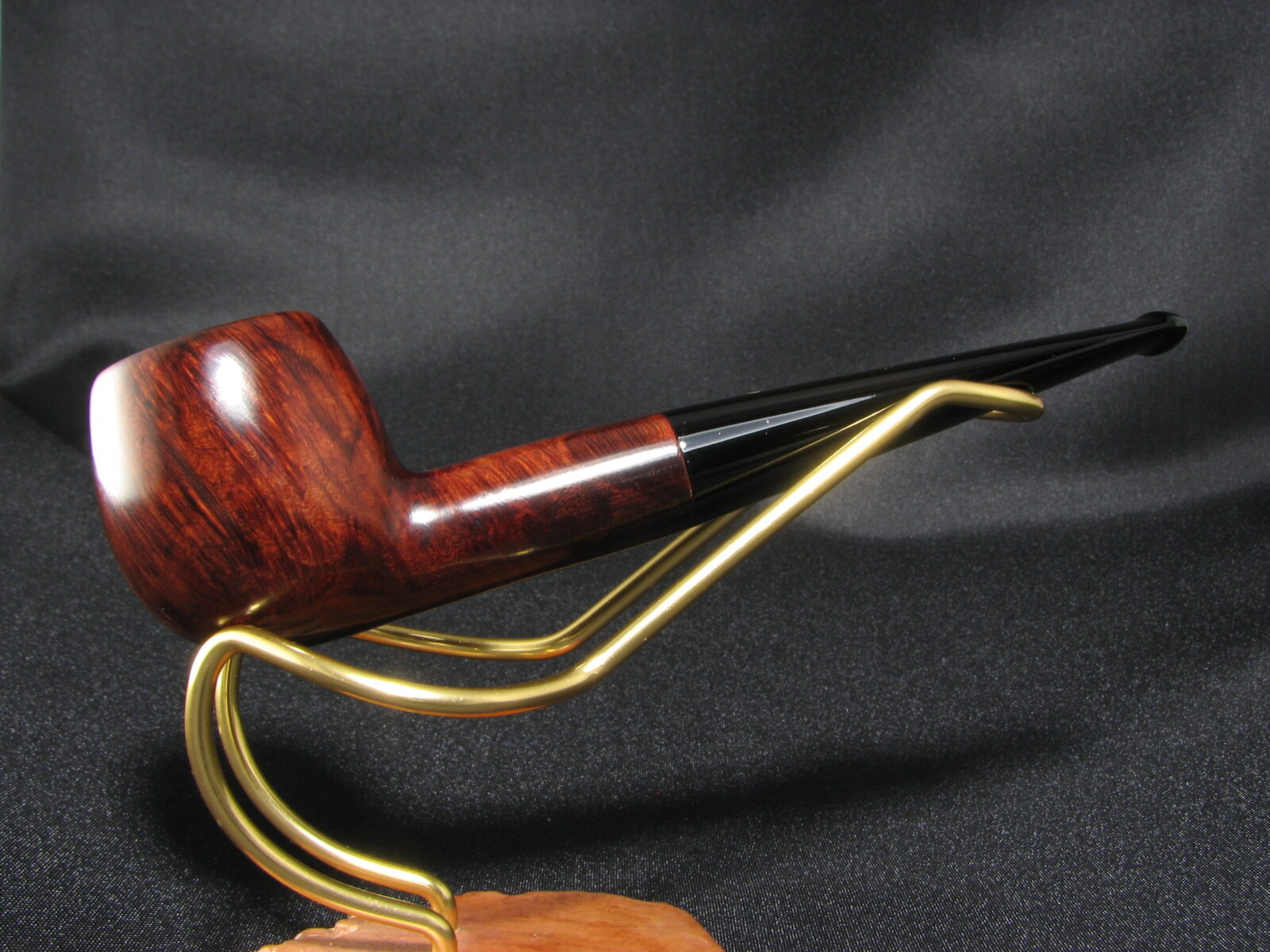
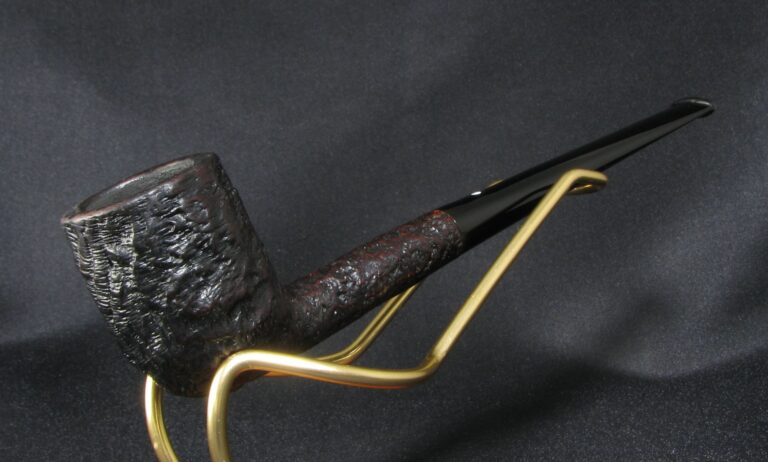
So, what we have on our today’s pipe? The stamping says “A”, “DUNHILL \LONDON”, “*”, “MADE IN ENGLAND \PAT No. 1343253/20”, “107”. “107” is the shape number, we listed already a Dunhill Root Briar pipe with such a shape number. “A” is the designation of Dunhill Bruyere pipes used till 1954. There are different interpretations for the patent number but the most plausibly the number 1343253/20 was applied during the periods 1927-1933 and 1937-1941 in the USA. And definitely not later. According to experts the year suffixes could be absent on pipes in these limits of 1927 or during the World War II. So, it’s either the 1927 or the 1941.
With regards to the five-angle star, it’s origin is even more vague. As far we know the manufacturer denies that ever marked pipes with a five-angle star. Therefore it is the most probably, that such a marking was added by a reseller to distinguish the pipes sold through his chain. Nevertheless the star looks very attractively.
The length is 12.8 cm, bowl’s hight is 3.6 cm. External and internal diameters of the bowl are 3.4 cm and 1.8 cm. The depth is 3.1 cm and this pipe weights 24 gr. Briar, vulcanite stem, no filter.