CHARATAN'S Make Authentic 483DC

CHARATAN’S Make Authentic 483DC

England, 1960s

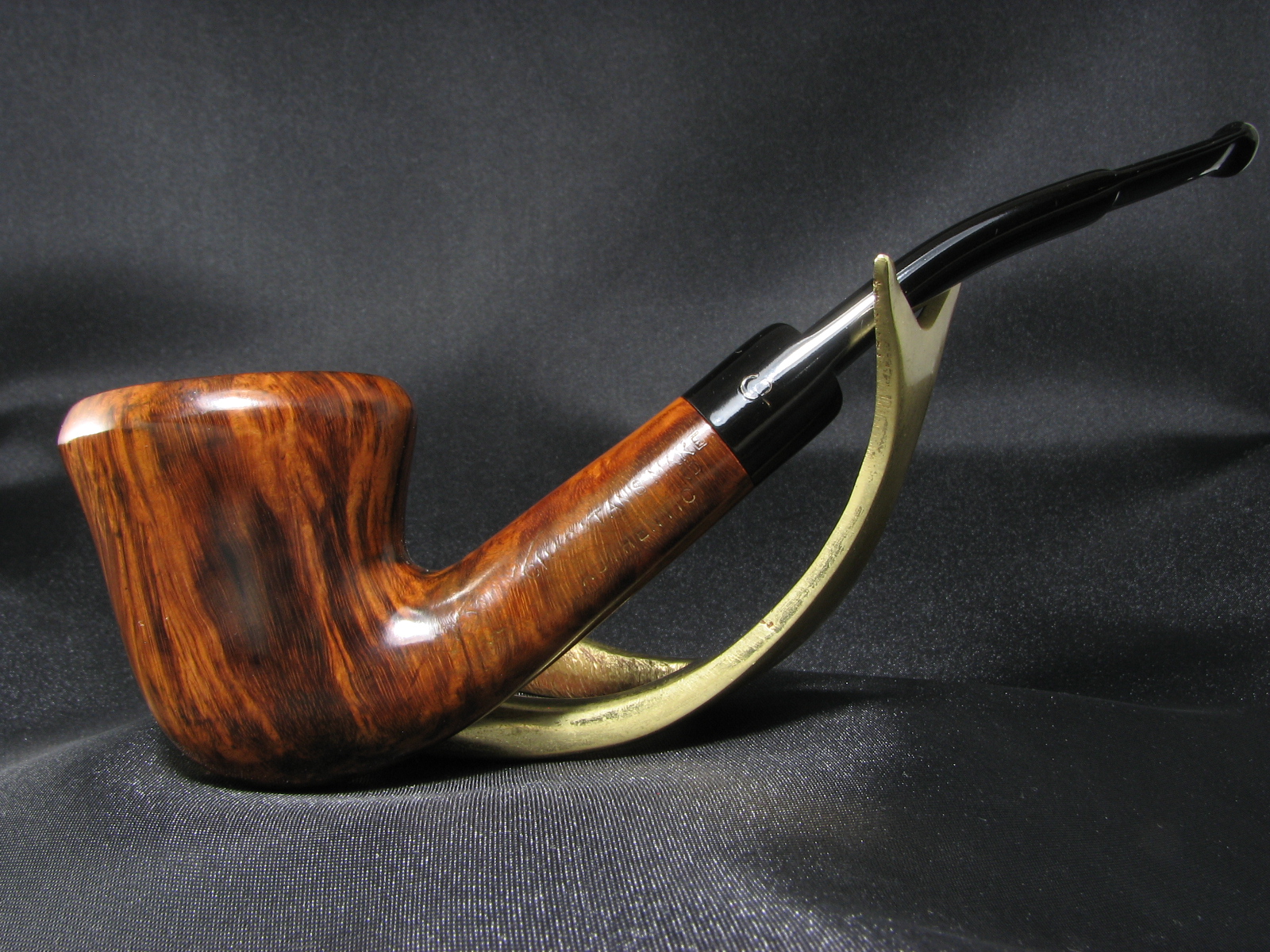
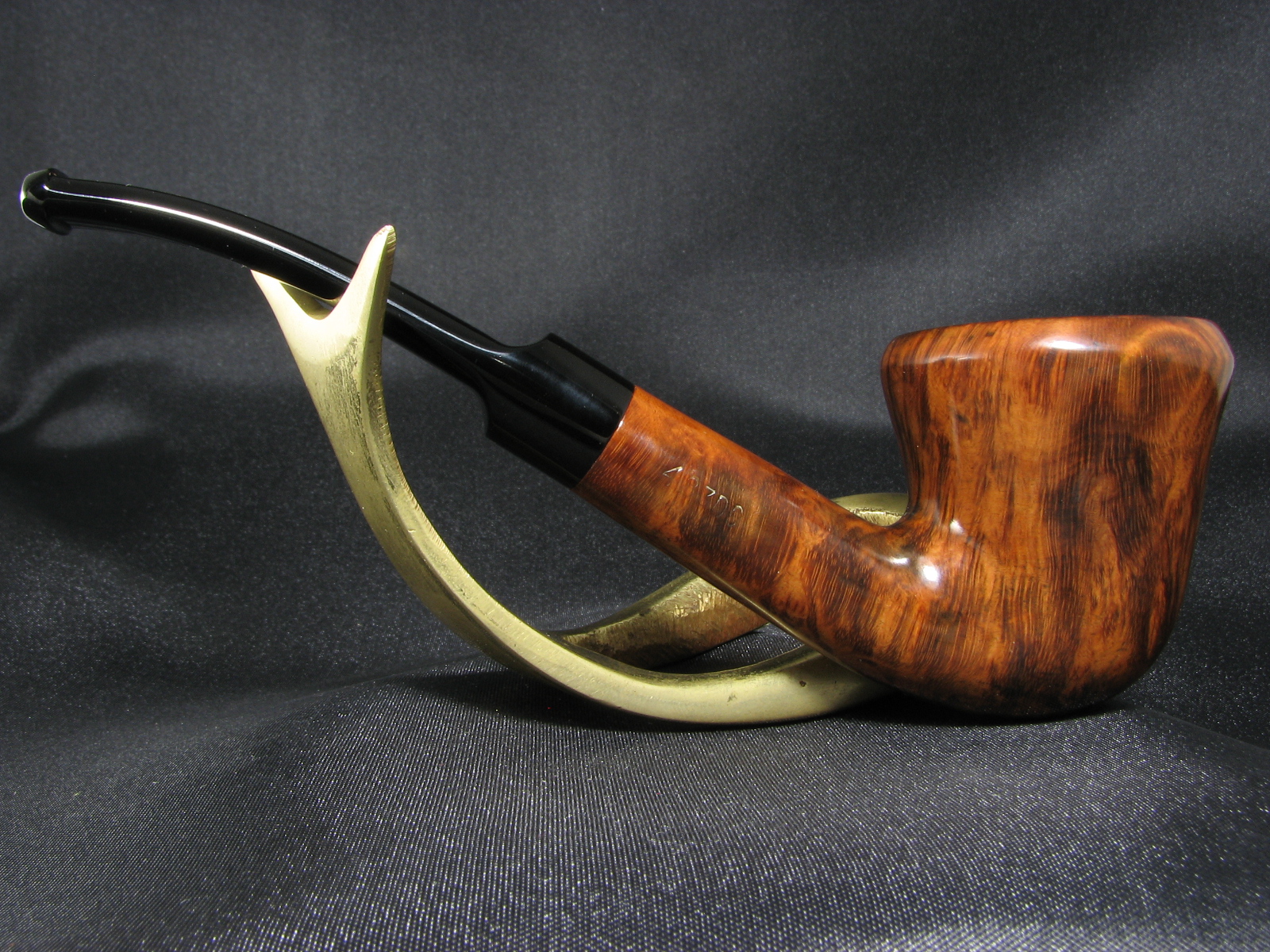
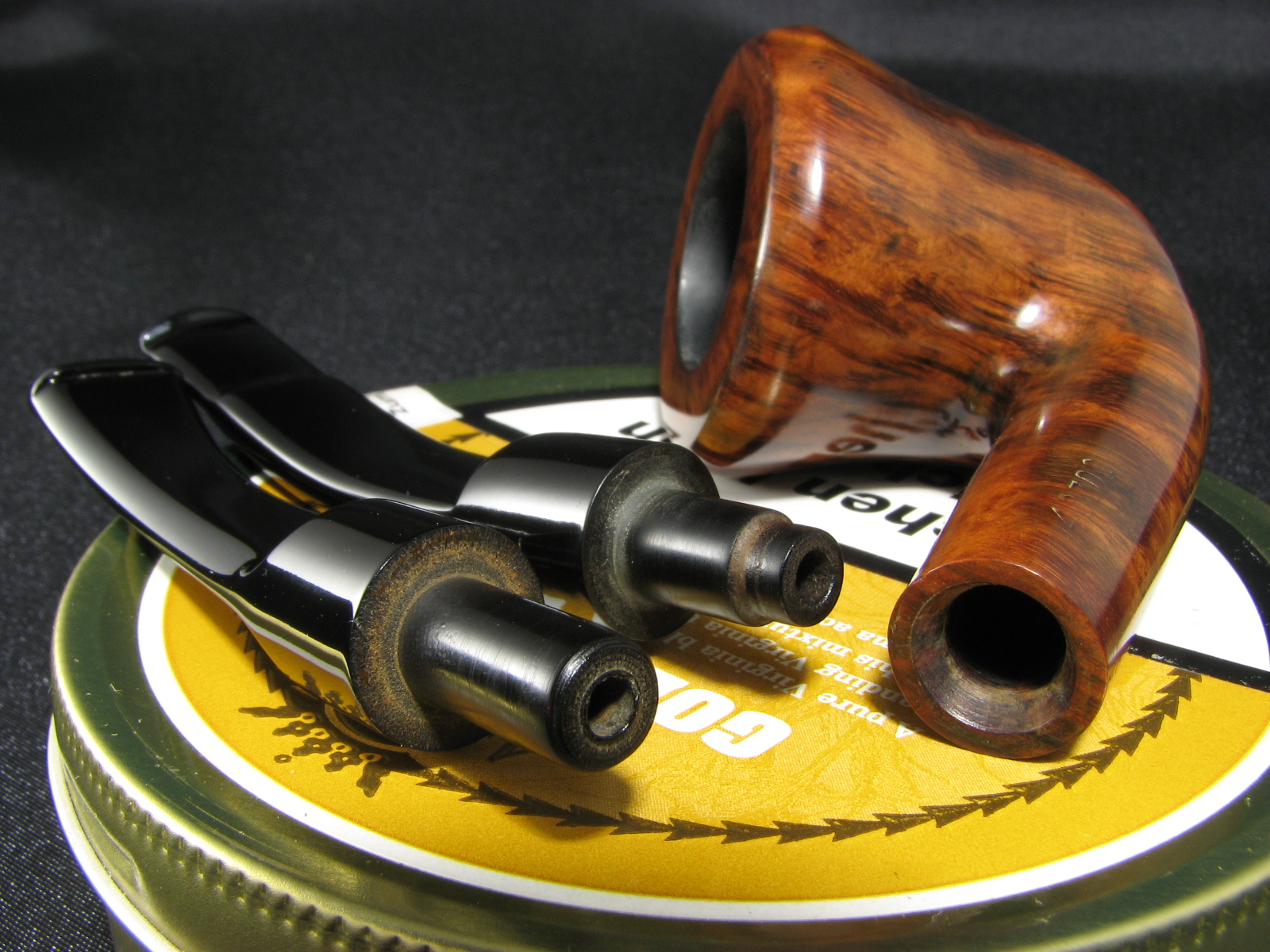
Charatan’s Authentic is a very rare series similar to the “Special” but finished with much more contrast stain. This “Authentic” of the unique 483 shape did require more efforts than usual: there were some dents and a small surface neat crack on the bowl and a chip in the button. Of course all these issues are restorable and we recovered the pipe (and even made an additional stem), but taking into account the rarity we decided to keep the pipe in our collection.

The pipe markings are “CHARATAN’S MAKE \ LONDON. ENGLAND \ AUTHENTIC”, “483DC”. The length is 14.3 cm (5.63″), or 13.5 cm (5.31″) with the replacement stem, bowl’s height is 5.0 cm (1.97″). External diameter of the bowl is 4.7 cm (1.85″), internal diameter is 2.2 cm (0.87″). The depth is 4.0 cm (1.57″) and this pipe weights 42 gr. Briar, vulcanite stem, no filter. The chamber has been protected with a break-in coat. The pipe is completed with an additional newly made spare stem.

Similar Posts

  • MADE BY HAND unsmoked

    England, 1960s The stamping “Made by hand in London City” was absolutely typical for the Charatan’s second Lane era (1965 – middle of 1970s) pipes. This unsmoked sample was perhaps predetermined to become at least an upper middle grade pipe, but a couple of scratches (or surface neat cracks?) changed its destiny quite dramatically and…

  • CHARATAN’S MAKE Executive

    England, 1960-70s A Charatan’s pipe of “the second Lane era” (1965-76), the period of the brightest blossoming of this brand, delightful shapes and grains, which eclipsed all others pipe makers including Dunhill. There’s no shape number on the pipe – it was made by one of the leading carvers at this factory regardless any catalogues….

  • CHARATAN’S MAKE Selected 56

    England, 1950s This is a pipe from Charatan’s second-highest grade, just below the highest grade known as “Supreme.” It appears that this pipe was made before 1960, as the shape number is situated alongside the nomenclature on the left side of the shank, similar to how it was done on pipes from the “family era.”…

Leave a Reply

Your email address will not be published. Required fields are marked *